
When you're ready to sell your car, you'll find yourself at a crossroads: chase the highest possible price, or opt for the quickest, most hassle-free sale? Your main avenues are a private sale, a dealership trade-in, or an instant online buyer — and the best one hinges on what you value most, your time or your money.
Finding the Best Place to Sell Your Car
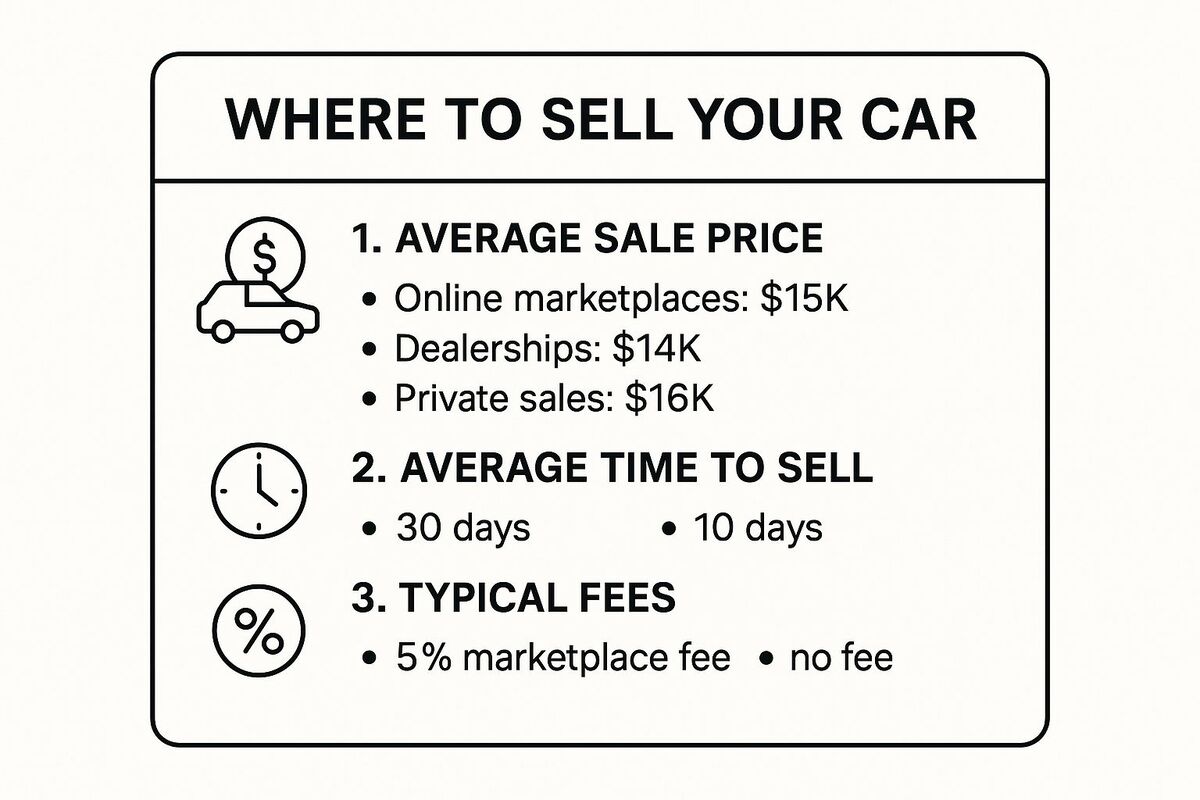
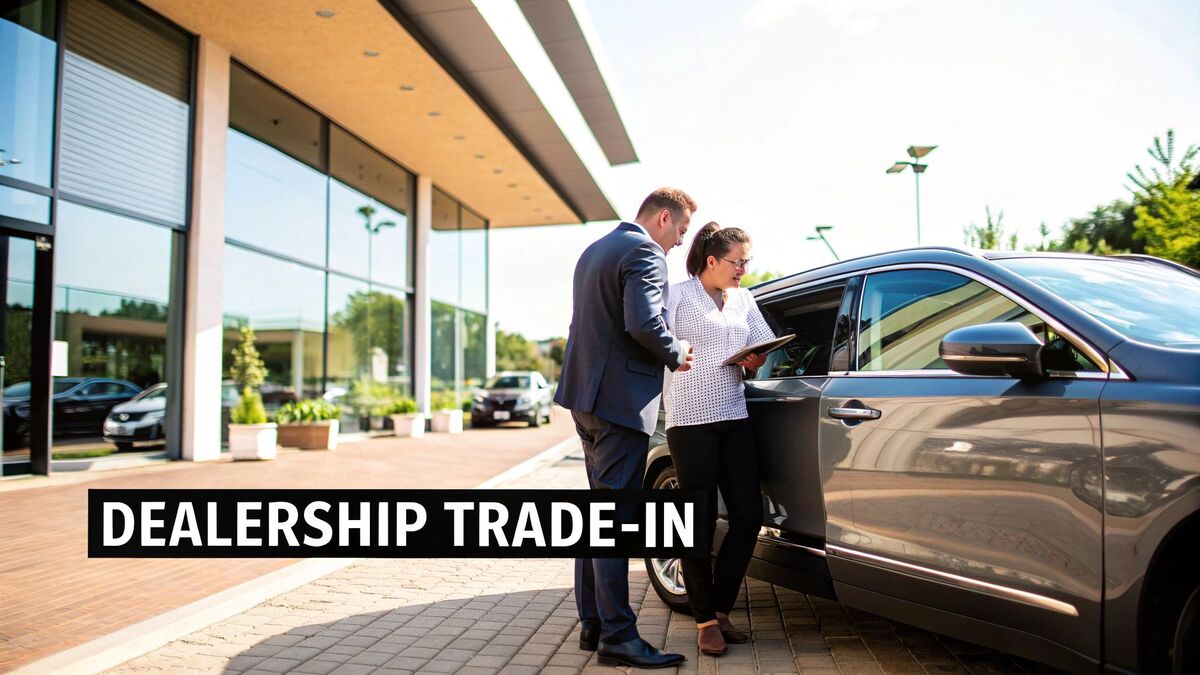
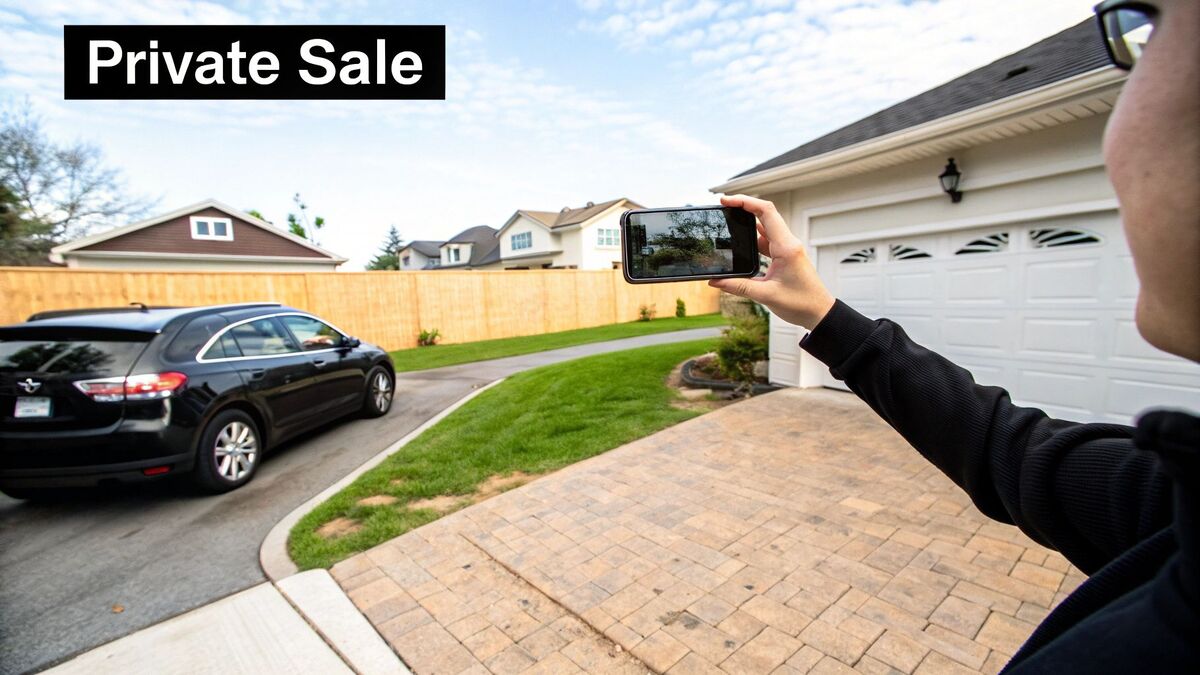
If speed is your top priority, a dealership trade-in is hard to beat — drive in with your old car, drive out with a new one, paperwork handled. The catch is that trade-in offers are almost always lower than open-market value. Selling privately is where you make the most money by cutting out the middleman, but it demands your time: writing the ad, taking photos, fielding calls, arranging test drives, and handling the paperwork.
- Private sale — highest potential price, slowest (weeks/months), high effort.
- Dealership trade-in — lowest price, fastest (same day), low effort.
- Instant online buyer — medium price, fast (1–3 days), very low effort.
Getting Your Car Ready to Impress and Sell
That first look is crucial — a sparkling, well-presented car feels like a well-cared-for car, and a bit of elbow grease can add hundreds to your final price. Go beyond a quick wash: tackle the scuff marks on the door sills, the dust in the air vents, and the brake dust on the wheels. A pristine interior makes a massive difference, so professional deep cleaning can be a smart investment.
Get your paperwork in order
- The original logbook — telling the car's service history.
- Service and repair receipts — proof of new tyres, a timing belt, and so on.
- Registration papers — non-negotiable proof you own the car.
A complete, neatly organised service history can easily boost a used car's value — it takes the guesswork out for the buyer and gives them the confidence to meet your asking price.
Take care of minor cosmetic issues too — small scratches, stone chips, or a cracked tail light give buyers an easy reason to haggle. And check your state's rules: in Queensland and Victoria a Roadworthy Certificate is mandatory for most private sales.
How to Nail Your Car's Selling Price
Go too high and your phone stays silent; too low and you're giving away cash. Start with a baseline from a trusted valuation site like RedBook, then play detective on Carsales and Gumtree to see what people are actually paying. Filter for your car's twins:
- The same make, model, and year.
- Kilometres within a 10,000 km range of yours.
- The same transmission (auto vs manual).
- Similar condition — and be honest with yourself.
The asking price is rarely the final sale price. Most private sellers build a small buffer into their price for haggling — you should do the same.
Navigating the Top Selling Platforms
A private sale will usually get you 10–15% more than a trade-in, but it can take 30 to 60 days. The big private platforms each have their own crowd:
- Carsales — the premier destination for serious buyers who expect a detailed ad with professional photos.
- Gumtree — fantastic for older or more affordable cars, with lower listing fees, though you'll sift through some low-ball offers.
- Facebook Marketplace — unbeatable local reach and zero fees; casual, so more time-wasters, but well-priced popular models sell fast.
If managing enquiries feels overwhelming, a dealership trade-in or a modern instant-buying service (an online valuation, an inspection, and a sale within days) trades cash for convenience.
Location Matters: Understanding Your Local Market
A car's value isn't fixed across Australia — it swings depending on whether you're in a city or a country town. Your car might pull a higher price in Sydney or Melbourne simply because there are more buyers, while a small regional town means a smaller pool. But it's also about what people need:
- Inner cities — fuel-efficient compact cars and hatchbacks, where parking is tight.
- Regional and rural areas — utes and 4WDs that handle country roads and hard work.
- Coastal towns — SUVs and cars with tow bars or roof racks for the boating and camping lifestyle.
Match your car to the right buyer — a ute in a farming community can command a strong price, while the same ute in a city of tiny laneways is better off on a nationwide platform.
Got Questions About Selling Your Car?
Is a roadworthy certificate a must-have?
It depends on your state. In Victoria and Queensland you can't sell privately without one. In NSW it's not always required to transfer registration but is strongly recommended — it gives buyers peace of mind and helps the car sell faster.
What paperwork do I really need ready?
At minimum, proof of ownership, the current registration papers, and your state's transfer form filled out correctly. The secret weapon for the best price is the original logbook showing a full service history.
We offer competitive cash prices with on-the-spot payment and free towing anywhere in Adelaide.