
What Really Is Vehicle Scrap Value?
A vehicle's scrap value is the market price for its raw materials once it reaches the end of its life. Unlike resale or trade-in value, which depend on performance and condition, scrap value focuses entirely on the commodity price of metals like steel, aluminium, and copper. The calculation is straightforward: your car's total weight multiplied by the current price per tonne for scrap metal.
- Ferrous metals — steel and iron make up most of a car's weight, forming the chassis, panels, and frame.
- Non-ferrous metals — aluminium engine blocks, copper wiring, and brass radiators are worth significantly more per kilogram than steel.
- Salvageable parts — alternators, catalytic converters, and quality tyres can be removed and resold separately.
So What's My Scrap Car Actually Worth?
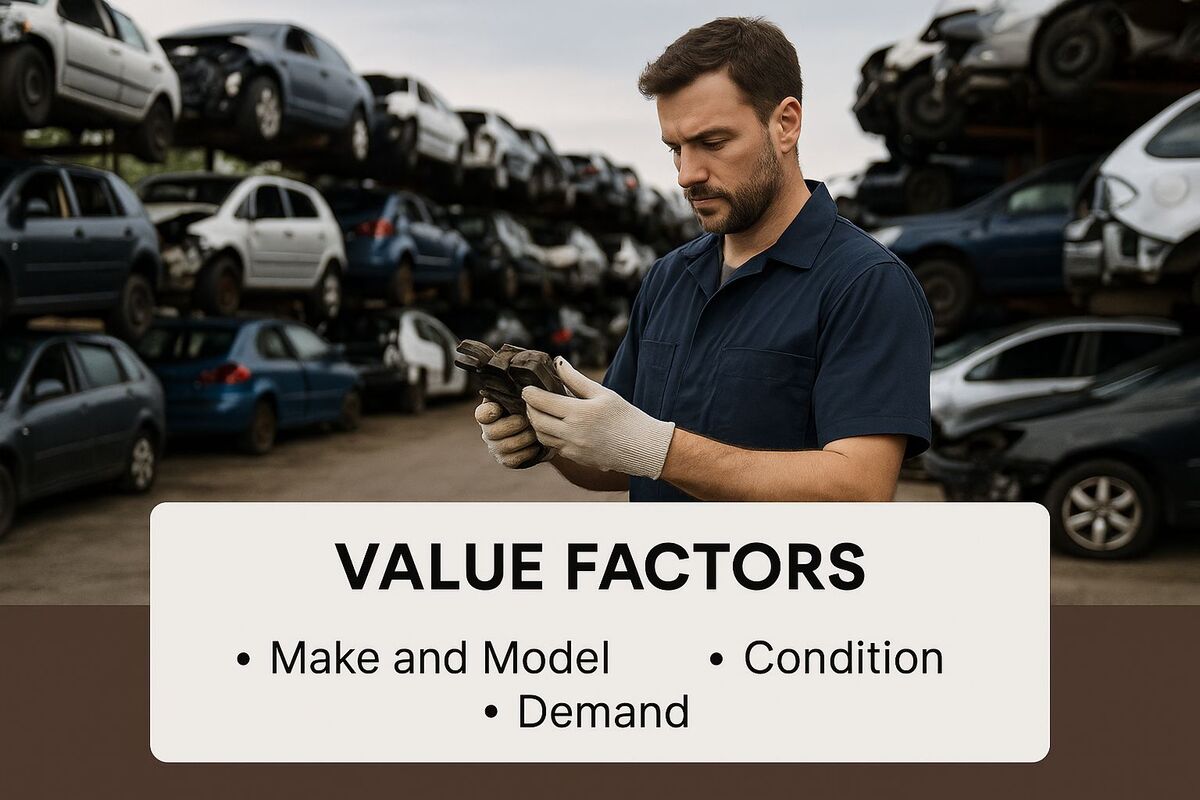
Scrap yards calculate value using several tangible factors:
- Vehicle weight and size — the single most important factor; a Holden Colorado ute is worth far more than a Suzuki Swift for its metal content.
- Make, model, and year — these influence demand for salvageable parts; a common Camry has parts still in high demand.
- Condition and completeness — a car with engine, transmission, and catalytic converter intact beats a stripped shell.
- Current scrap metal prices — global prices for steel, aluminium, and copper set the baseline.
An older, more common vehicle can actually be worth more than a rare one, because demand for its spare parts is much higher.
In 2023, the average price for a scrap car in Australia hovered around $560, a small increase on the previous year.
The Economic Tipping Point for Scrapping
The tipping point arrives when repair costs exceed your car's market value and scrap worth — the moment it shifts from a useful asset to a costly liability. If a 15-year-old car needs a $3,000 transmission, its private-sale value is $2,500, and a scrap yard offers $500 with no repairs needed, the choice becomes clear.
When your car becomes a liability
- Frequent breakdowns consuming significant mechanic time.
- Serious rust, particularly on the frame, creating safety hazards.
- Failing major components like the engine, transmission, or head gasket.
- High running costs, especially poor fuel efficiency.
For electric vehicles, the major factor is often staggering battery replacement costs, which can easily exceed the car's remaining value.
How to Get an Accurate Quote in Adelaide
First, gather your car's details — make and model, year, VIN, and general condition (is it a runner, which parts are missing or damaged). Use an online scrap value calculator for a ballpark figure, treating it as a starting point rather than a final offer. Then call at least three local scrap yards and ask:
- What is your cash offer based on my vehicle's details?
- Is towing included for free, or are there collection fees?
- Are there any hidden administrative or environmental charges?
- Is this quote guaranteed, or could the price change upon inspection?
Getting quotes from at least three different local scrap yards is the single best way to ensure you're getting a competitive price.
Proven Strategies to Maximise Your Payout
Strip and sell valuable components separately
Before saying goodbye, check for parts in excellent condition — you'll often get more selling them privately than their contribution to scrap weight: new or quality tyres, a battery less than a year old, or a brand-name aftermarket stereo.
Don't overlook the catalytic converter
It contains platinum, palladium, and rhodium that fetch high prices. A reputable dealer always includes its value in their quote, but knowing its worth gives you negotiating leverage.
Prepare your paperwork and clean the car
Have ownership documents, registration papers, and photo ID ready, and clear out all personal belongings so the tow driver can inspect and hook up easily.
We Answer Your Top Questions
Do I need to prove I own the car to scrap it?
Yes — any licensed dealer requires proof of ownership to prevent stolen vehicles entering the scrap trade. Have registration papers or the title plus valid photo ID ready.
My car doesn't even start. Is it worth anything?
Don't assume it's worthless — the steel frame, body panels, and chassis all add up. Non-running cars are quoted on their value as scrap metal.
What happens to my car after I sell it?
Depollution drains all hazardous fluids; technicians salvage working parts to sell as second-hand components; then the shell is shredded and sorted by magnets and sensors, with the clean raw materials sold to mills and foundries.
We offer competitive cash prices with on-the-spot payment and free towing anywhere in Adelaide.