
Got an old car that's seen better days? Selling it for parts can be a fantastic way to squeeze every last dollar out of it, especially if it's been in a prang, won't start, or happens to have some really desirable components. Instead of taking a lowball offer for the whole vehicle, breaking it down lets you sell the good bits individually. Sure, it takes a bit more elbow grease, but the payoff can be well worth it.
Is Parting Out Your Car Actually Worth It?
Before you even think about reaching for the spanners, you need an honest chat with yourself: is selling your vehicle for parts really the best move? Not every car is a treasure trove of components. The real value is in finding that sweet spot between your car's condition and the time you're willing to put in.
Take a classic Adelaide situation. Say your old Holden Commodore has copped a fair bit of panel damage, making it too pricey to fix and a tough sell. But its V8 engine and transmission are running sweet with low Ks. In a case like this, the car is almost certainly worth more in pieces than as a complete, damaged unit.
When Does Parting Out Make Sense?
- It has high-demand components: A sought-after engine, gearbox, or specialty parts in great nick — think performance models, 4x4s, or reliable old workhorses.
- It's a rare or classic model: Enthusiasts often struggle to find original parts for older or less common cars. Your bits could be exactly what they need.
- The damage is just cosmetic: The body might look rough, but if the engine, drivetrain, and electronics are all sound, you've got a great candidate.
Here's the question you need to ask: "Can I make significantly more money selling the top 3–5 parts than I would selling the whole car to a wrecker?" If the answer is a clear yes, then it's a project worth tackling.
Weighing Up the Profit vs the Effort
The easy way out is always a quick sale to an auto removal service. Parting out a car, on the other hand, requires a place to work, the right tools, and a serious time commitment. You have to balance the potential for a bigger payout against the sheer convenience of a one-and-done deal.
How to Figure Out What Your Car's Parts Are Really Worth
Knowing what your car's individual pieces are worth is the difference between a profitable project and a frustrating waste of time. The big-ticket items are usually the engine and transmission, especially if they're in good nick with low, verifiable kilometres. But don't sleep on the smaller treasures — catalytic converters, engine control units (ECUs), alternators, and even complete airbag modules can fetch surprisingly good money.
Researching the Local Adelaide Market
Your best bet for pricing is to go where the buyers are. Spend some real time browsing local online marketplaces like Gumtree and Facebook Marketplace, looking for parts from the exact same make and model as your car.
- Engine & transmission: Search for your specific engine code and transmission type. Prices can swing by over $1,000 depending on the kilometres and overall condition.
- Body panels: Try to find panels in the same factory colour as yours. A straight, undented door in a popular colour will always sell for more.
- Wheels & tyres: Check the brand, size, and how much tread is left. A clean set of genuine alloy wheels with decent rubber is far more appealing than scuffed steelies with bald tyres.
Estimated Value of High-Demand Car Parts
- Complete engine (good, low km): $800 – $2,500+
- Transmission, automatic (good, working): $500 – $1,500
- Catalytic converter (intact, OEM): $150 – $800+
- Alloy wheel set with tyres (good, minimal rash): $300 – $1,000
- Headlights, pair (clear, no cracks): $100 – $400
- Alternator / starter motor (working): $50 – $150
- Car doors, each (good paint, no dents): $100 – $350
These values can shift based on rarity and demand, so always check what similar items are currently listed for in Adelaide.
A detailed catalogue is your negotiation playbook. When a buyer makes an offer, you'll know instantly whether it's a fair price or a lowball attempt, because you've already done the homework.
The Smart Way to Dismantle Your Car
This isn't about grabbing a sledgehammer; it's a careful, methodical process. Before you even think about loosening a single bolt, make sure your toolkit is up to the task — a good socket and spanner set, screwdrivers and pliers, a reliable jack, and, most importantly, a set of sturdy axle stands. Thinking about pulling the engine or transmission? Don't even try it without an engine hoist.
The Right Way to Take It Apart
The best way is to work from the outside in. This stops you from leaning over loose bits and pieces, saving a heap of time and frustration.
- Start with the interior: Get the seats, centre console, dashboard bits, and stereo out first. These are generally easier to remove and find buyers quickly.
- Move to the exterior: Carefully unbolt the doors, bonnet, boot lid, and bumpers. Getting these off clears a huge amount of space.
- Tackle the engine bay: Before you even look at the engine, disconnect the battery. Then start removing the radiator, alternator, air-con compressor, and starter motor.
Staying Safe and Organised
First, drain all the fluids — oil, coolant, brake fluid, and whatever fuel is left. Use proper containers and dispose of them responsibly. When it comes to tricky components like airbags, always disconnect the battery and wait at least 30 minutes before you touch them, so the system can discharge.
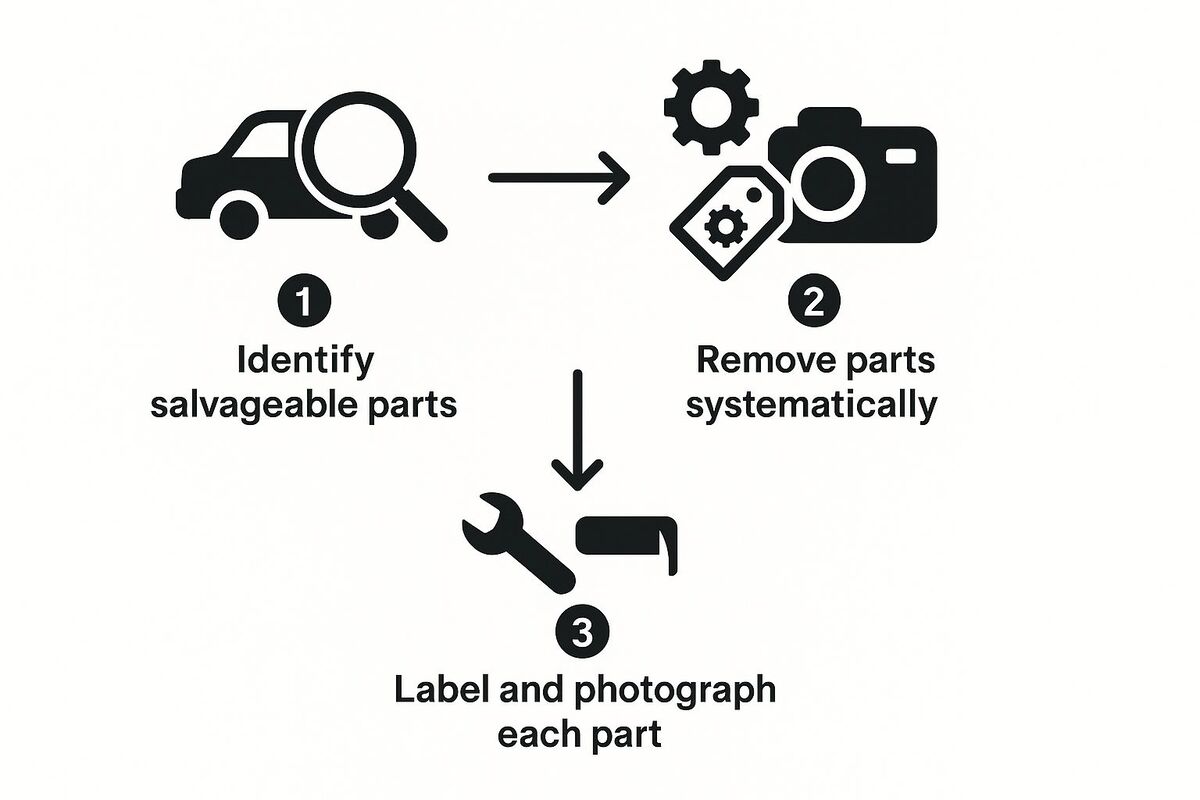
Pro tip: As you take each part off, label it straight away. Jot down what the part is, the car it came from (model and year), and a quick note on its condition. This habit will save you a world of pain later when people start calling with questions.
Creating Online Listings That Actually Sell
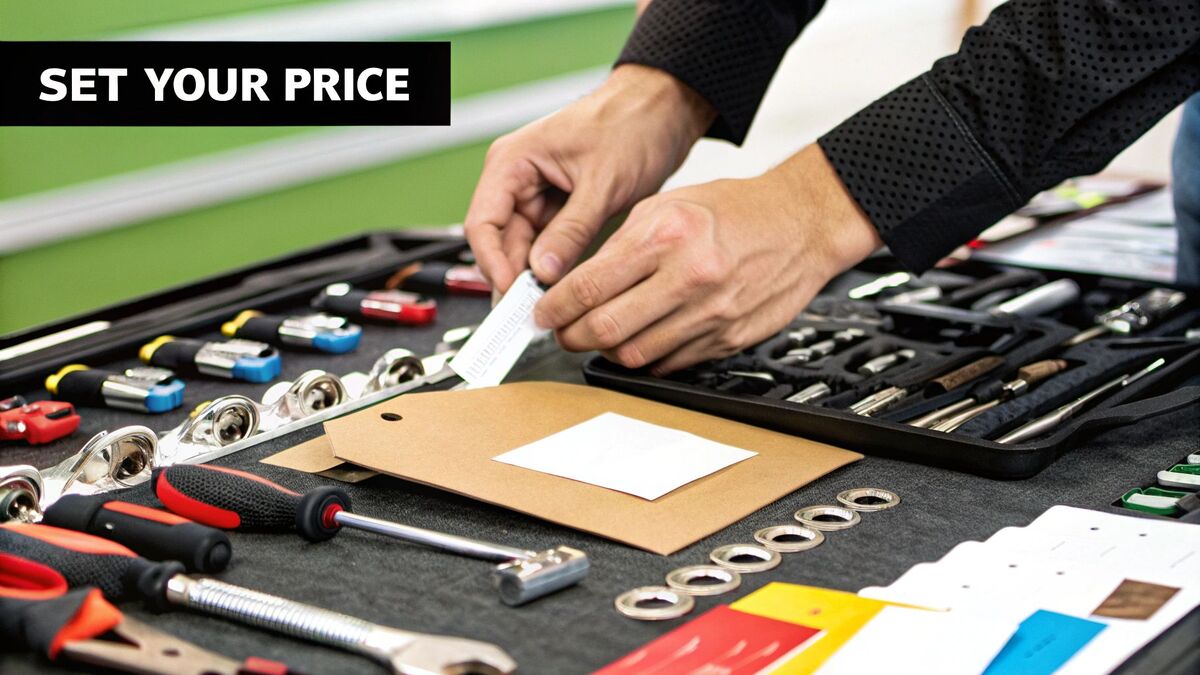
For anyone selling in Adelaide, your go-to platforms are Facebook Marketplace and Gumtree. Your title is the first thing people see, so make it count and be specific — include the part name and the car's make, model, and year. For instance, "Ford Falcon FG Right Front Guard" is a world away from a vague "car parts for sale".
When you're writing the description, just be straight up. Clearly point out the part's condition, including any scuffs or normal wear. If you can find the part number, definitely include it — that one detail is gold for a serious buyer.
The golden rule for a great listing is to give a buyer every piece of information they need to say "yes" without having to send you a message: killer photos, an honest description, and a fair price.
Juggling Buyers and Closing the Deal Safely
When you're selling a vehicle for parts, you'll need patience and a knack for spotting genuine buyers from time-wasters. Expect a flood of lowball offers. The trick is to be polite but firm, always pointing back to the fair price you've researched.
Getting Paid and Organising a Safe Handover
When it's time to talk money, cash is king. Cash on pickup is by far the safest route, sidestepping online scams, bounced payments, or chargebacks.
- For local pickups: Lock in a clear time and have the part ready for inspection. If a buyer comes to your property, make sure you're not alone.
- For shipping interstate: Never post anything until payment has fully cleared. Always use a reliable courier with tracking.
The job isn't done when the last part is sold. The final step is the paperwork to make sure the car is officially off your hands and off the road.
Once you've sold off the valuable components, cancel the vehicle's registration by lodging an 'Application to Cancel Vehicle Registration' with Service SA and handing back the number plates. Always get a receipt from the scrap dealer who collects the leftover shell, and keep a copy of your cancellation form.
Common Questions About Parting Out a Car
What paperwork is needed to scrap a car in SA after parting it out?
After selling off the valuable components, you're left with a bare chassis that needs to be legally taken off the road. In South Australia, you'll have to fill out and submit an 'Application to Cancel Vehicle Registration' at a Service SA centre and hand in the number plates. Always get a detailed receipt from the scrap metal dealer who takes the shell — this is your proof of disposal.
Which car parts bring in the most cash?
No surprises — the engine and transmission are usually the big-ticket items, especially in good working condition with low kilometres. Catalytic converters are always in high demand because of the precious metals inside. You might also be surprised by alternators and starter motors, intact airbags, modern infotainment systems, and a full set of alloy wheels.
The real trade-off: dismantling the car yourself will nearly always put more money in your pocket, but it's a huge commitment of time, space, and effort. Selling straight to a wrecker is the quick-and-easy path — you get paid on the spot, and they haul it away for you.
We offer competitive cash prices with on-the-spot payment and free towing anywhere in Adelaide.