
Selling a car for scrap can feel like a last resort, but honestly it's one of the smartest things you can do with a vehicle that's past its prime. That old car isn't just taking up space in your driveway — it's a bundle of cash waiting for you, and a chance to do a bit of good for the planet.
Why Scrapping Your Car Is a Smart Financial Move
Turn a liability into an asset
An idle car is a potential liability — it can leak oil, coolant, and other nasty fluids that harm the environment and might land you in trouble with the council. Selling it for scrap flips that problem into a genuine asset.
The real beauty of scrapping is turning a depreciating object into instant cash. Instead of watching it rust away, you get paid to have it taken off your hands responsibly.
Play your part in a circular economy
The metals recovered from your car are melted down and repurposed, cutting the need to mine new resources. It's a booming global industry projected to hit USD 154.94 billion by 2032, and with about 70% of a car's weight being highly recyclable steel, your scrap car is a clear win-win: instant payment, a benefit to the planet, and free towing and paperwork handled for you.
How Your Car's Scrap Value Is Calculated
First and foremost, it's about weight — the biggest driver is the amount of steel, and a heavier SUV or ute starts higher than a small hatchback. But make, model, and year matter too, because some cars are worth far more for their parts. A good removal service sees a collection of salvageable parts:
- Catalytic converters — packed with platinum and other precious metals, a high-value item.
- Alternators and starter motors — consistently needed for repairs.
- Undamaged body panels — doors, bonnets, and guards used to fix other cars.
- Alloy wheels — aluminium rims are worth significantly more than steel ones.
The condition of these parts really counts. A complete engine, even one that's seized, holds far more value than a rusted-out block.
Completeness is the final piece — a whole car always fetches a better price than one picked apart over the years, because it's far more efficient for the recycler. Being upfront and accurate about condition is the surest way to a fair quote.
Getting Your Car Ready for a Smooth Handover
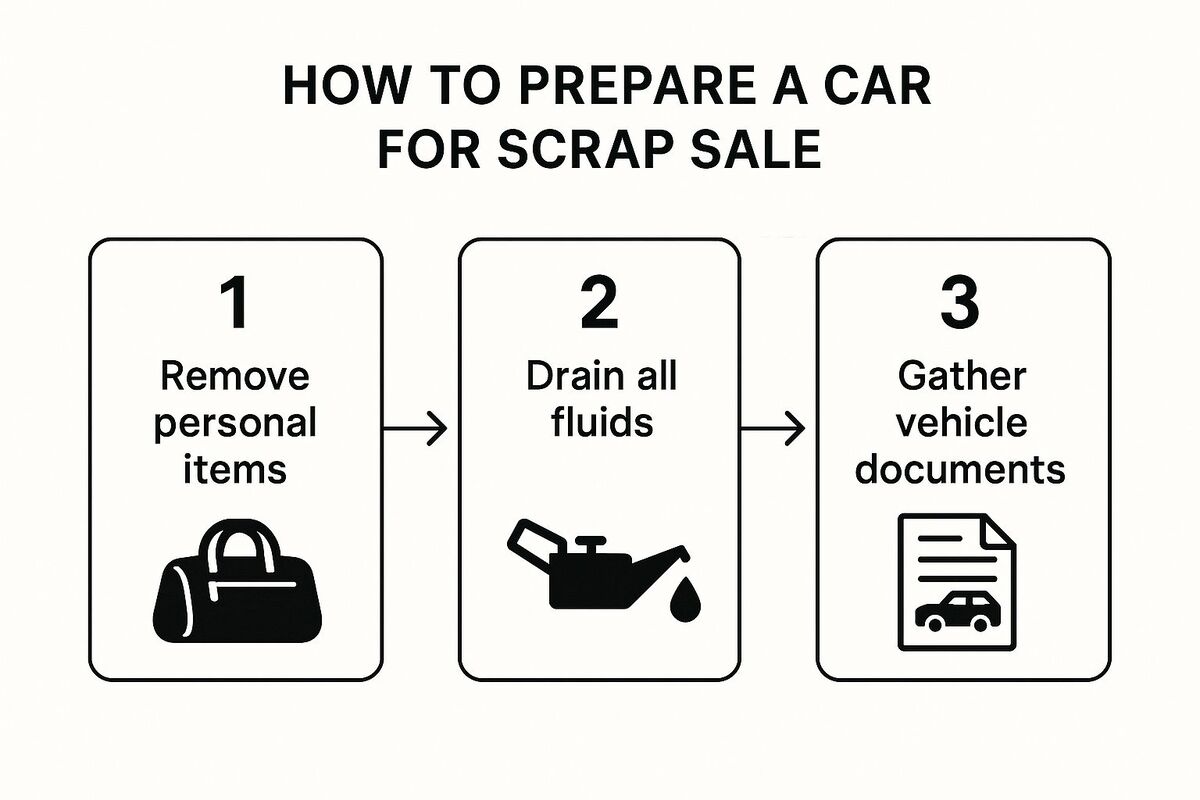
Do a thorough sweep for personal belongings — the glove box, centre console, door pockets, under the seats, and the boot. Then remove the number plates (in South Australia, return them to Service SA to cancel the registration), and have your documents ready:
- Proof of ownership — the vehicle's title or registration certificate.
- Valid photo ID — a driver's licence or other government photo ID.
Having your proof of ownership and a valid photo ID ready is the single most important thing you can do — it proves you're the legal owner and lets us finalise the deal instantly.
What to Expect on Removal Day
After you accept the offer, you lock in a pickup time that suits you — a weekday afternoon, a Saturday morning, whatever works. Our drivers have collected cars from tight residential streets and mechanics' workshops, and come equipped for almost any situation. On the day, the driver does a quick walk-around to confirm the car matches what was discussed, you sign the straightforward paperwork, and you get cash on the spot before the car is even loaded.

The Green Benefits of Scrapping Your Car
That old car is packed with valuable raw materials — the steel in its body, the aluminium in the engine block, the copper in its wiring — all recoverable and reusable, cutting the need for destructive mining. Recycling the metal from even one vehicle saves a staggering amount of energy versus creating it from virgin ore, and professionals ensure old oil, battery acid, and antifreeze are disposed of safely rather than seeping into soil and water. Around 850,000 vehicles reach the end of the road in Australia each year, and using a professional scrapper pushes recycling rates higher.
Common Questions About Selling a Scrap Car
Do I need registration papers to scrap my car?
Ideally yes, but it's usually not a deal-breaker — a reputable Adelaide service can verify you're the owner using your driver's licence and the car's VIN. Give them a quick call beforehand to confirm what you'll need.
Will you still buy a car that's wrecked or not running?
Absolutely — we buy cars in every condition. A car's scrap value comes from its weight in metal and salvageable parts, not its ability to drive, and free towing is standard.
How fast is the process?
The whole process is built for convenience — most professional scrap services can give a quote the same day and schedule a pickup within 24 hours, with cash in hand when they collect the car.
We offer competitive cash prices with on-the-spot payment and free towing anywhere in Adelaide.