
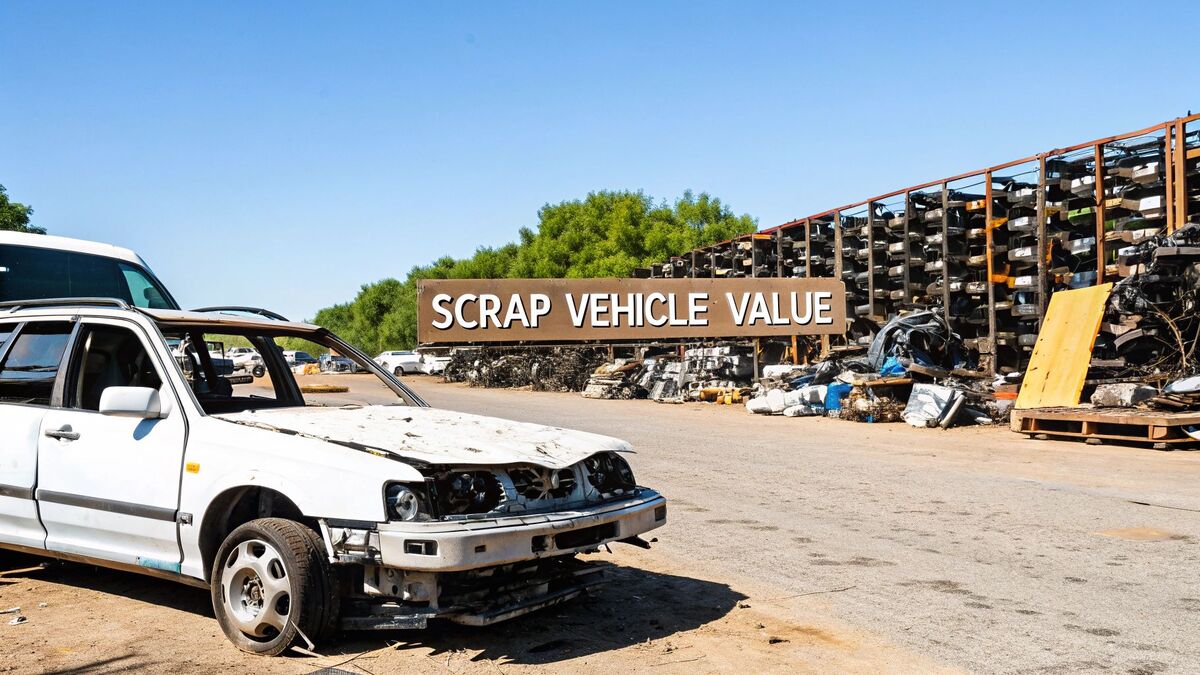
Unpacking Your Scrap Car's Hidden Worth
Wondering what your old vehicle is actually worth? The value of a scrap car varies dramatically, ranging from approximately AUD 300 for a non-running vehicle to upwards of AUD 9,000 if it contains valuable components. Consider it not as a single useless item but as a collection of resources — its raw metal weight combined with salvageable parts.
A quick guide to scrap payouts
It's the cars with fully intact, working engines, transmissions, or other major components that fetch the highest prices.
- Non-running or incomplete vehicles: AUD 300 to AUD 800, valued almost entirely for scrap metal.
- Damaged but drivable vehicles: AUD 800 to AUD 2,500, combining metal value with salvageable parts.
- Vehicles with high-value parts: AUD 2,500 to AUD 9,000+, featuring solid engines or transmissions.
The Key Factors That Determine Scrap Value
Vehicle weight and scrap metal prices
The baseline value comes down to weight — a larger SUV or ute contains far more metal (mostly steel, with some aluminium and copper) than a small hatchback. In Australia, steel is the biggest player, making up about 70% of a car's weight. These raw materials are commodities with daily-fluctuating prices; a construction boom can push steel higher and lift your car's baseline value.
Make, model, and demand for parts
A sought-after engine, a working transmission, or even intact body panels from a common vehicle can be far more valuable than the car's weight in scrap metal.
Two cars of identical weight can receive vastly different offers based on parts availability — a common model with strong mechanical demand commands more than a rare vehicle with little second-hand market interest.
The impact of location and condition
Cars with undamaged, accessible parts command better prices than stripped or heavily damaged vehicles. Your distance from the yard matters too — while most services offer free towing, transport cost influences the final quote.
Why Scrapping Your Car Is a Smart Environmental Choice
Recycling metals from your driveway eliminates the need for new mining, protecting resources and cutting the carbon footprint of manufacturing. Approximately 80% of the average car can be recycled:
- Steel and aluminium — frames, panels, and engine blocks melted down for new products.
- Plastics — dashboards, bumpers, and trim processed into new components.
- Glass — windscreens and windows become new glass products.
Scrapping isn't really about getting rid of something; it's about recovering it.
End-of-life vehicles also contain hazardous fluids — engine oil, antifreeze, battery acid — which professional yards safely drain and dispose of. The global vehicle scrapping market is projected to grow from USD 82 billion to nearly USD 155 billion by 2032, driven by stricter environmental regulations.
How the Used Car Market Affects Scrap Prices
When used car prices surge, owners repair rather than replace, reducing the flow of vehicles to scrap yards — and with smaller supply, wreckers compete more aggressively, pushing prices higher. When used car prices drop, more owners upgrade and yards flood with supply, potentially lowering prices. The July Automotive Insights Report pointed to a 2.8% drop in used car sales from the previous month. This has led to a record-high inventory of nearly 340,000 vehicles just sitting on dealer lots.
A booming used car market often means a leaner supply for the scrap industry, which can directly boost your payout.
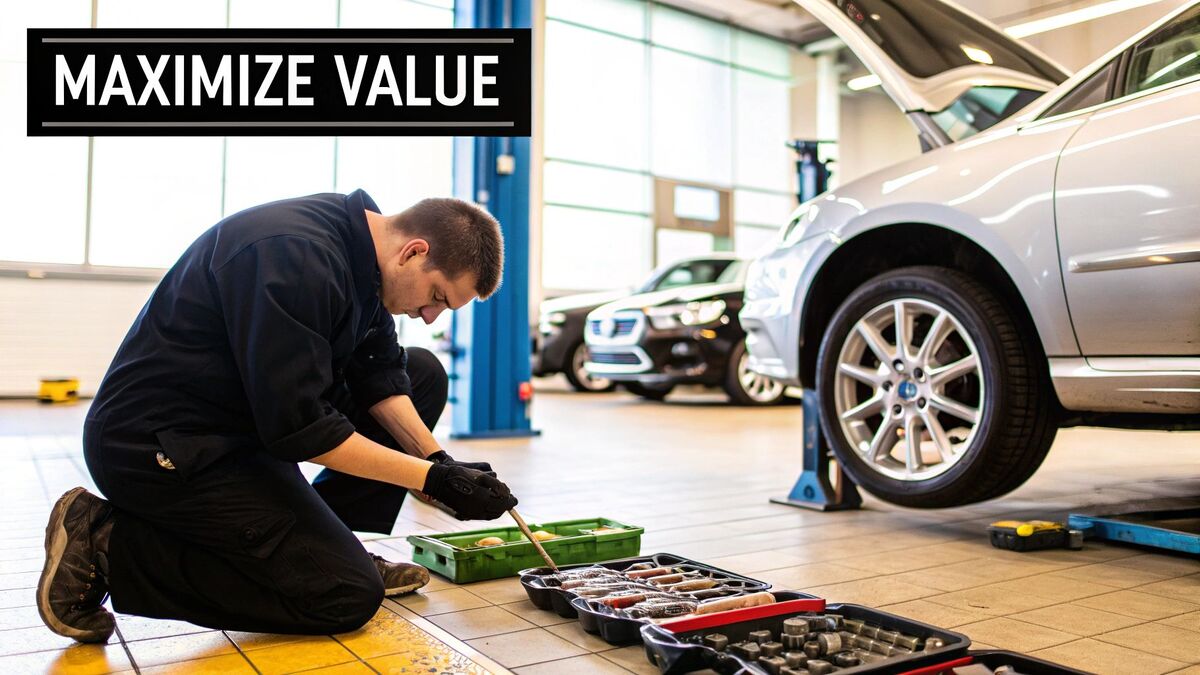
Practical Steps to Get the Best Price
Create competition by getting multiple quotes
Never accept the first offer — get quotes from at least three services, providing identical information each time: make/model/year, kilometres, an honest condition description, and your suburb.
Prepare your proof of ownership
Any reputable scrap car buyer will insist on seeing proof of ownership — usually your registration certificate, plus a valid driver's licence.
Consider selling valuable parts separately
Handy sellers can sometimes maximise returns by selling catalytic converters, newish batteries, or good tyres and rims independently — but balance that against the time and effort; most find one complete sale worthwhile.
Common Mistakes That Lower Your Scrap Value
The biggest is accepting the first offer without a benchmark. Another is forgetting to clear personal belongings — once the tow truck departs, they're gone. The most critical legal oversight is neglecting to lodge a Notice of Disposal with your transport authority.
Failing to notify your state's transport authority that you've sold the vehicle is a costly oversight — until then, you remain legally responsible for any future fines or tolls.
Got Questions? We've Got Answers
Do I need my registration papers to scrap my car?
They streamline the process but aren't absolutely necessary — most reputable yards can purchase with just a valid driver's licence, verifying ownership through the national database.
How is the final scrap price worked out?
Basic value from the car's weight in scrap metal (at current market rates), plus the value of high-demand salvageable parts, minus dealer costs for towing and handling.
Will I get a better price if I drive it to the yard myself?
Sometimes — free towing is factored into quotes, so delivering it yourself can save them fuel and time, sometimes passed to you as a higher payout. Ask if it's safe to drive and registered.
We offer competitive cash prices with on-the-spot payment and free towing anywhere in Adelaide.