
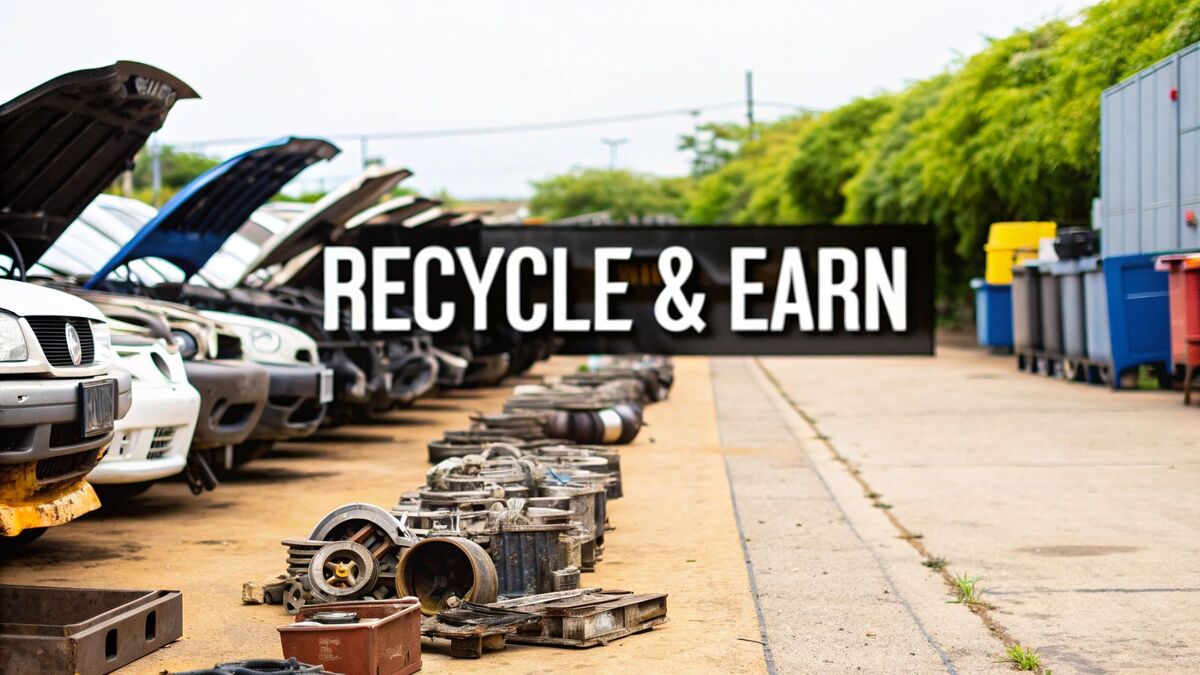
Turning your old car into cash isn't just a savvy financial decision — it's a huge win for Australia's environmental and economic health. Recycling automotive parts means taking vehicles that have run their last race and carefully dismantling them to reclaim valuable materials like steel and aluminium. Stop thinking of your old car as junk and start seeing it for what it is: a treasure chest of resources.
A Treasure Trove of Materials
The average passenger car is built from materials that nearly all have recycling potential:
- Steel — most of the car's frame and body; it can be recycled over and over without losing strength.
- Aluminium — in the wheels, engine block, and transmission; recycling it saves about 95% of the energy of making it from scratch.
- Precious metals — tiny but incredibly valuable amounts of platinum, palladium, and rhodium inside the catalytic converter.
- Plastics and glass — bumpers, dashboards, and windows can be recovered and given new life.
The Environmental and Economic Rewards
Forging new metals from raw ore burns enormous energy and leaves a hefty carbon footprint — recycling sidesteps that whole cycle. Recycling automotive steel cuts CO₂ emissions by about 58% compared to making it from raw materials, and with transport responsible for roughly 18% of Australia's emissions, better car recycling is a direct action against climate change. Professional recyclers also safely drain and dispose of toxic fluids like engine oil, coolant, and brake fluid.
By choosing to recycle, you're not just getting rid of an old car — you're conserving resources, saving energy, and cutting greenhouse emissions, a simple act with a powerful ripple effect.
For you, the payoff is direct: instant cash payment, no hidden costs (free towing included), and a fair market value based on current scrap metal prices.
The Most Valuable Parts of a Scrap Car
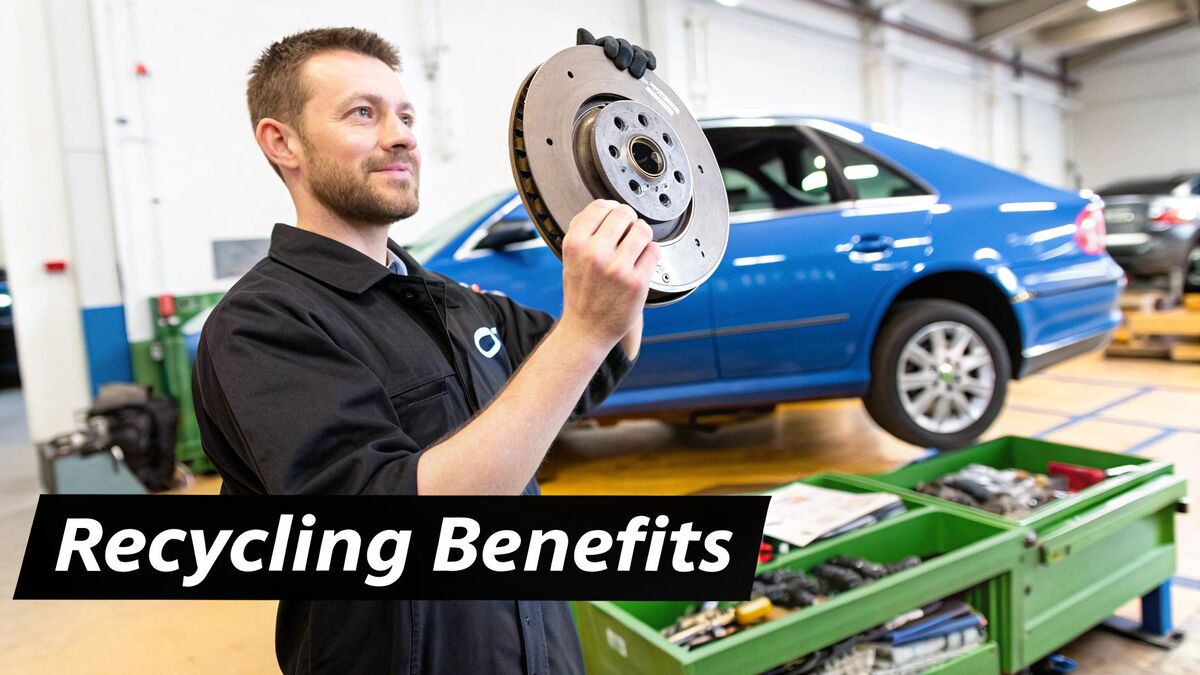
The heavy hitters: engine and transmission
The engine and transmission are dense, complex pieces built mainly from high-quality steel and aluminium — their sheer weight makes them the biggest single contributor to scrap value, and a car with these still inside is always worth more than one stripped of them.
The unsung hero: the catalytic converter
The most valuable part relative to its size, the converter contains a honeycomb coated with precious metals:
- Platinum — rare and highly sought-after.
- Palladium — valuable and essential in electronics.
- Rhodium — one of the rarest, most expensive metals on the planet.
Bulk metals and other valuables
The chassis, doors, and body panels are infinitely recyclable steel, accounting for most of the weight. Aluminium wheels are a great find, and the electrical system's copper wiring and lead-acid battery, plus interior parts, all chip in.
How to Prepare Your Car for Recycling
Clear out all your personal belongings — check the glove box, centre console, under the seats, the boot, and seat-back pockets. Then prove you're the legal owner with your registration papers (or title) and a valid photo ID whose name matches.
It might seem helpful to drain the oil, coolant, or petrol yourself — please don't. These are hazardous materials needing specialised equipment, and professionals handle them under strict environmental rules.
Staying Safe and Legal in Australia
Always work with a licensed auto recycler — they're legally bound to handle toxic fluids and materials correctly. Dismantling a car yourself is dangerous: nasty fluids, explosive undischarged airbags, pressurised air-conditioning systems, and toxic lead-acid batteries. After collection, cancel the registration with your transport authority to officially take the car off the road and end your responsibility.
The Future of Automotive Recycling
Recycling cars is set to get even smarter, and the plastics side shows just how much room there is to grow. Australia's waste plastic recycling market was valued at around USD 1.2 billion and is expected to more than double, exceeding USD 2.4 billion by 2033, as tougher waste laws and demand for sustainable materials reshape the industry.
Recycling EV batteries
An EV's lithium-ion battery pack isn't like the old lead-acid battery in your petrol car — it's a sophisticated bundle of valuable and often scarce materials like lithium, cobalt, nickel, and manganese. Being able to effectively recover these rare metals from EV batteries is becoming a cornerstone of sustainable transport.
AI and advanced material sorting
Modern facilities increasingly lean on automation to separate shredded material. High-speed cameras scan the mix and AI algorithms identify different materials in a fraction of a second, then robotic arms or targeted jets of air sort them into clean, separate streams. This makes it possible to recover specific plastic polymers, non-ferrous metals like copper and aluminium, and even rare earth elements from vehicle electronics.
Common Questions About Recycling Automotive Parts
How much cash can I get for my old car parts?
It depends on the car's weight, make and model, condition, and current scrap metal prices. High-value items like the catalytic converter, a complete engine and transmission, and aluminium alloy wheels can bump up the price. A good service gives a transparent quote.
Can I recycle a car that's damaged or not running?
Absolutely — the value is in raw materials, not whether it drives. Recyclers are after the steel frame, aluminium engine block, and copper wiring, and they have the gear to tow vehicles in any state.
Do I have to arrange towing?
Not at all — professional services include free towing and schedule a pickup right from your driveway at a time that suits you.
We offer competitive cash prices with on-the-spot payment and free towing anywhere in Adelaide.