
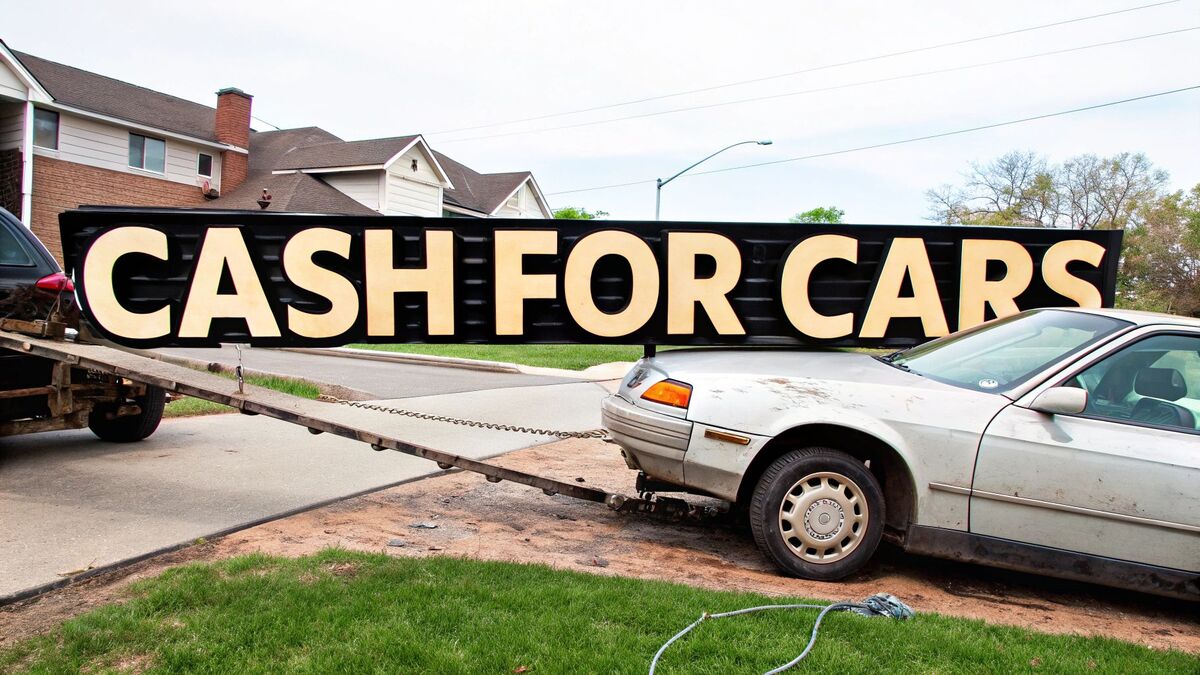
That old car in your driveway might look like a problem, but it represents an opportunity. Junking your car for cash is a surprisingly simple way to turn a dead, damaged, or unwanted vehicle into instant money — usually with free removal, so you can skip the drama of private sales and stop pouring money into endless repairs.
Is It Time to Junk Your Car?
We've all been stuck in the "just one more repair" loop. But there comes a point where the smartest financial move is to let it go — and the decision gets easier when you weigh what you're spending against what you're getting back. The biggest red flag is when the mechanic's bills are bigger than the car's actual value.
When repairs are a waste of money
- Catastrophic failures — a blown engine, dead transmission, or cracked head gasket are game-over for most older cars.
- Serious rust or frame damage — once structural integrity is gone, so is your safety.
- Failing inspections — if it needs a mountain of cash just to pass a roadworthy check, its driving days are numbered.
Junking your car comes down to a simple cost-benefit analysis. When the expense and headache of keeping it running are more than it's worth, it's time to cash it in.
It's a natural part of the ownership cycle here — in fact, Australia is the world's second-cheapest country for car ownership, partly because of efficient scrappage schemes that make it easy to replace older, clapped-out cars. And junking is the responsible thing to do, too: fluids are drained and disposed of properly, good parts are salvaged, and the metal is recycled, keeping cars out of landfill and reducing demand for new raw materials. The end-of-life vehicle industry in Australia creates about 1.36 million tonnes of waste each year, and roughly 70% of it is recovered.
How Much Cash Can You Actually Get?
The value of your car is a mix of factors that goes well beyond age or kilometres. At its most basic, value comes from weight in scrap metal — the going rate for steel and aluminium changes with the market, and a heavy ute or sedan has more raw material than a tiny hatchback.
Beyond just a pile of metal
The real opportunity to boost your offer is in salvageable parts. Components in good nick can be pulled, refurbished, and resold:
- Engine and transmission — the big ones; if the heart of the car still works or is easily fixed, value shoots up.
- Catalytic converter — packed with precious metals like platinum and rhodium, a hot-ticket item for recyclers.
- Alternators, starter motors, and radiators — bread-and-butter replacement parts mechanics always want.
- Body panels and tyres — straight doors, bonnets, and guards without major damage, and tyres with decent tread.
The price range in Australia
A scrap car can range from a couple of hundred dollars up to several thousand — on average anywhere between $300 and $9,000. As a rough guide by condition:
- Scrap / shell only — non-running, heavily damaged, major parts missing: $150–$600.
- Non-running / wrecked — major issues but most parts intact: $500–$2,500.
- Running but end-of-life — drivable with significant issues like failed rego: $1,500–$5,000.
- Late model / salvageable — newer model with repairable damage or valuable parts: $4,000–$9,000+.
These are estimates — the specific make, model, and year play a massive role, so the only way to know for sure is to get a direct quote.
Getting Your Car Ready for a Smooth Handover
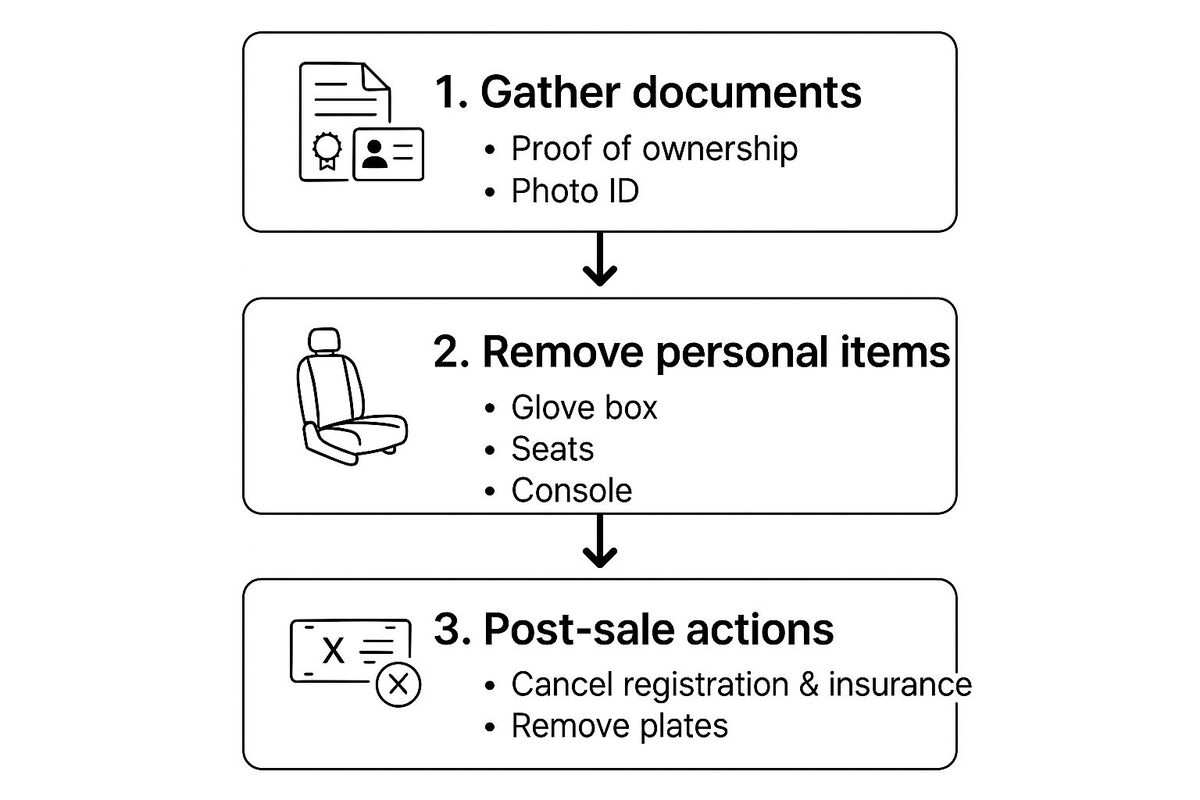
Before pickup, find your proof of ownership (the title or registration papers) and a valid photo ID to confirm you're the legal owner. Then give the car one last clean-out:
- Check everywhere — the glove box, centre console, door pockets, and especially under the seats.
- Don't forget the boot — look under the floor mat and in the spare tyre well.
- Remove your customisations — a special stereo or custom seat covers you want to keep.
Afterwards, cancel the vehicle's registration (you may be eligible for a refund on the unused portion) and call your insurer to cancel the policy.
Before the driver tows the car away, take the licence plates off. Depending on local rules you may need to return them to the transport authority, or you could transfer them to another car.
What the Removal Process Looks Like
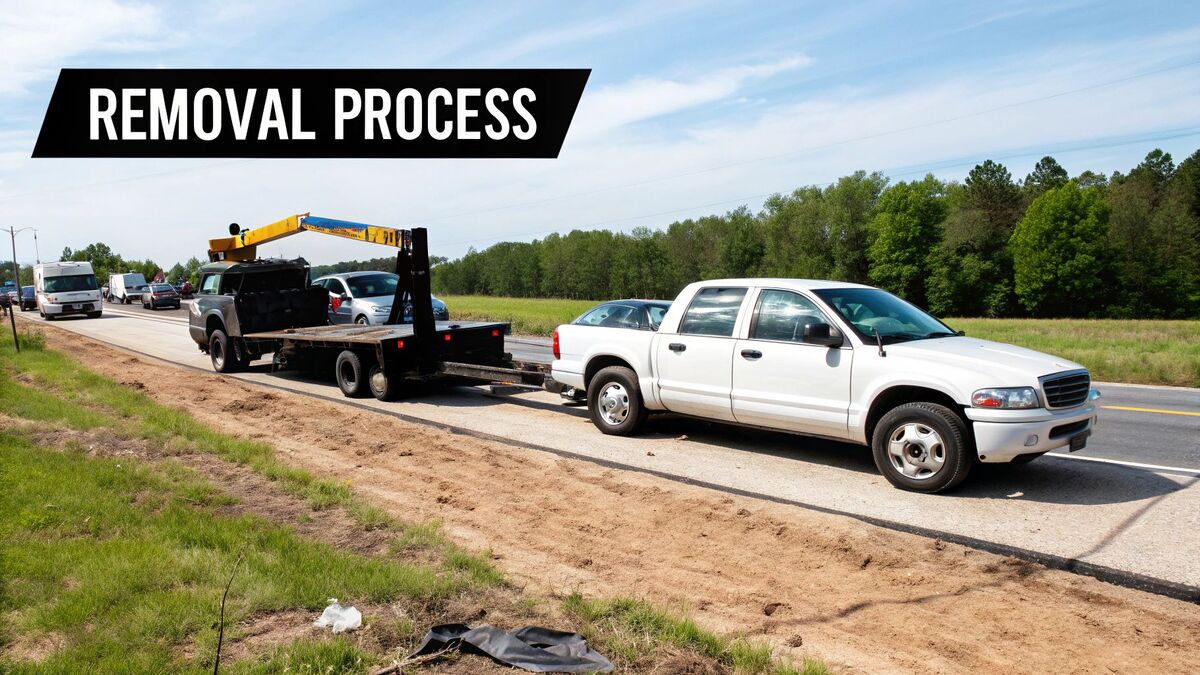
A professional company handles all the heavy lifting. You'll know you're dealing with the right people if they offer clear communication, guarantee free towing, and pay on the spot.
Making the call and getting your quote
- Is this quote guaranteed? — make sure the phone price is locked in, provided the car is as described.
- Are there any hidden fees? — towing and removal should be 100% free, with no surprises.
- How and when do I get paid? — trustworthy services pay cash on the spot at pickup.
- What paperwork do you sort out? — ask what they provide and what you sign to make the transfer official.
What to expect on pickup day
The driver does a quick walk-around to confirm the car matches what was discussed — not a deep inspection — then walks you through signing the transfer paperwork. As soon as that's done you get paid in cash, and the car is winched onto the truck. Your part takes no more than 15–20 minutes.
Common Mistakes to Avoid
The classic bait-and-switch
A company throws a fantastic number at you over the phone, then "discovers" problems on arrival and slashes the offer. Sidestep it by getting your quote in writing and asking point-blank: "Is this guaranteed, as long as the car is exactly as I've described?"
Don't get caught with an unlicensed operator
Working with an unlicensed operator is a huge risk. If they damage your property while towing, or something dodgy happens with disposal, you could be left responsible.
Ask for their licence number up front — a professional outfit will have no issue providing it. And never pay for towing; any decent service builds it into the price. A few other errors to avoid:
- Accepting a cheque or transfer — stick to cash in hand before you sign anything; cheques bounce and transfers can be reversed.
- Leaving your licence plates on — return them to the transport authority to officially deregister.
- Skipping the paperwork — always complete a notice of disposal or transfer of ownership form.
Got Questions About Scrapping Your Car?
Do I need rego papers to junk my car?
They make things quicker, but don't stress if you can't find them. Any reputable service can usually proceed with some form of ownership proof and a valid photo ID — just give them a heads-up when you call.
What happens to my car after you tow it away?
It starts its recycling journey — hazardous fluids like oil, coolant, and fuel are drained first, then usable parts (alternators, starter motors, good tyres, reconditionable engine components) are salvaged. The metal shell is then crushed, shredded, sorted, and melted down for new steel.
How fast will I get the cash?
For most people, a quote over the phone, a pickup arranged, and cash delivered within 24 to 48 hours — paid on the spot when the driver collects the car.
Does my car have to be drivable to sell it?
Absolutely not. Cars are bought in any condition — running, written-off, rusted, or not started in a decade. The value is in scrap metal weight and salvageable parts, and free towing is always included.
We offer competitive cash prices with on-the-spot payment and free towing anywhere in Adelaide.