
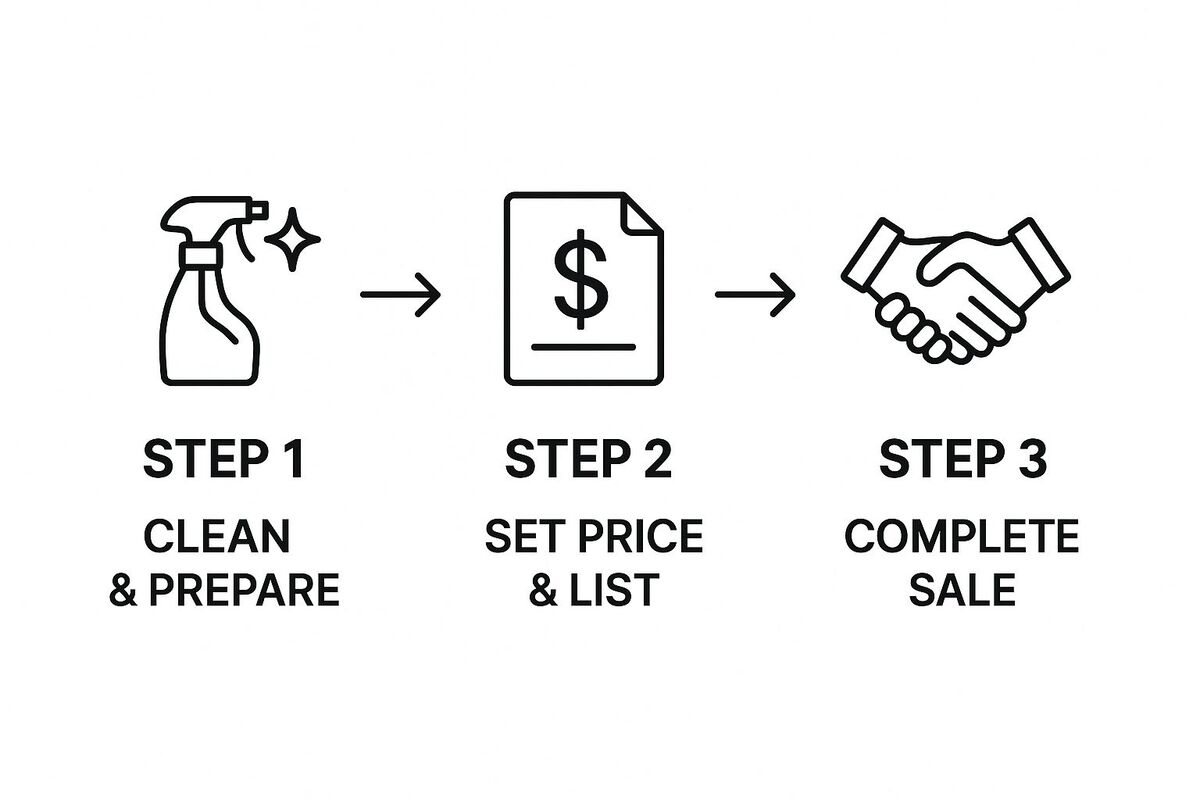
Selling your car privately involves three main phases: preparing the car, creating a standout ad, and safely closing the deal. Done right, this approach can net you thousands more than a dealer trade-in. The private market is about 15% of all Australian vehicle sales, and the process typically takes three to six weeks — so organisation from the start is essential.
Getting Your Car Ready to Impress Buyers
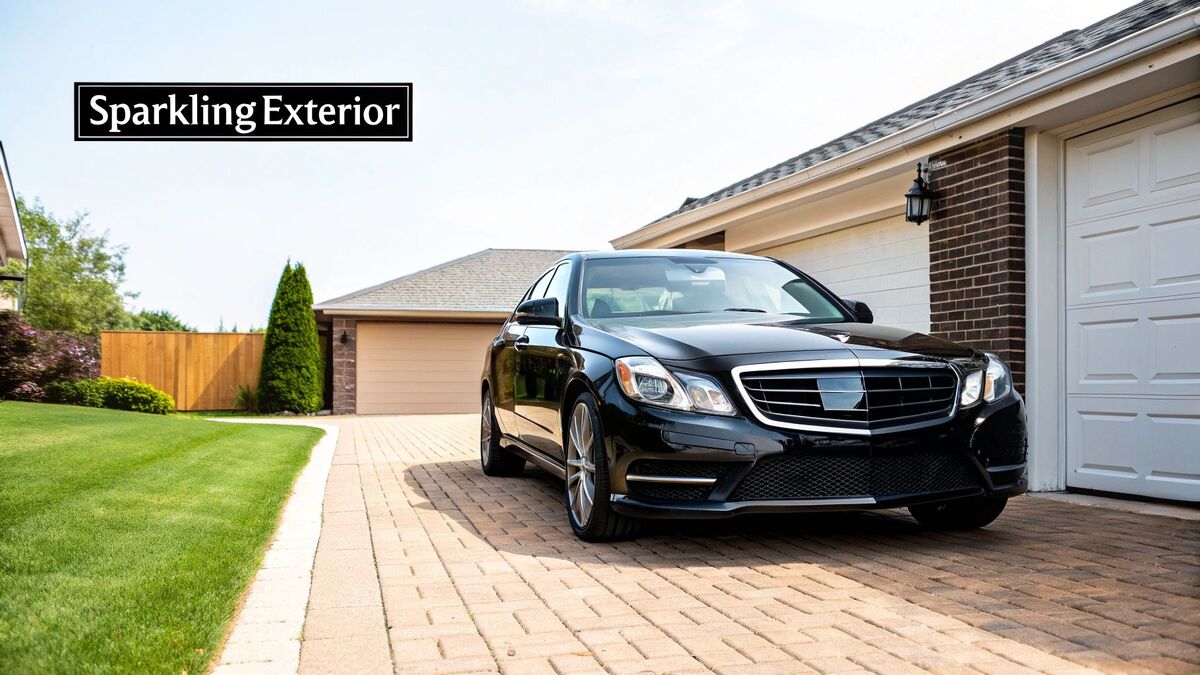
First impressions matter tremendously — a thorough clean and presentation can add hundreds or thousands to your final price.
A deep clean makes all the difference
- Empty everything out — remove personal items from the boot, glove box, and storage pockets.
- Vacuum thoroughly — every nook, the seats forward and back, and under the floor mats.
- Eliminate odours — use proper odour eliminators rather than air fresheners to clear pet, food, or smoke smells.
A clean, fresh-smelling interior has a huge psychological impact. It helps a buyer imagine the car as their own — a critical step towards an offer.
Compile your logbook, service receipts, and invoices in an organised folder, and tackle inexpensive cosmetic fixes — touch-up paint pens for stone chips, replacing cracked trim, upgrading worn floor mats, and polishing cloudy headlights.
How to Price Your Car Competitively
Research what buyers are actually paying for comparable vehicles on Carsales and Drive, using specific filters:
- Exact make, model, and year.
- Kilometres within 10,000–15,000 km of your reading.
- The same trim level and engine.
- Similar condition.
A complete logbook showing consistent servicing can easily add $500 to $1,500 to your asking price compared to an identical car without one.
Adjust for desirable factory options, recent major maintenance like new tyres or a timing belt, and pristine condition — and be realistic about drawbacks by pricing at the lower end of your range. List for about 5–10% more than your absolute lowest acceptable price to leave room to negotiate.
Creating an Online Listing That Gets Noticed
Your ad is your 24/7 salesperson. Shoot during golden hour (the first hour after sunrise or last before sunset) and capture the essential angles: front and rear three-quarter views, a direct side profile, straight-on front and rear, the dashboard with ignition on, the seats, a clear odometer reading, the empty boot, the wheels and tyres, a clean engine bay, and the logbook pages.
A comprehensive set of 20–30 high-resolution photos builds instant trust. It shows you have nothing to hide and saves both you and the buyer time.
In the description, lead with key stats — kilometres, registration expiry, transmission — and use honest, descriptive language rather than vague claims. Proofread carefully; a polished, error-free ad signals trustworthiness.

Fielding Enquiries and Nailing the Test Drive
Serious buyers ask specific questions — use them to gauge genuine interest before meeting. Never invite strangers to your home; always meet in a public location like a shopping centre car park, a police station's visitor parking, or a well-lit service station.
Before the test drive, request their physical driver's licence (not a phone photo) and photograph both sides. Let a friend or family member know where you're going, who you're meeting, and when you'll be back.
Always accompany the buyer during the test drive — plan a 15–20 minute route combining local roads and highway, and point out the car's best qualities as they drive.
Getting the Paperwork and Payment Sorted
What's the deal with the roadworthy certificate?
Requirements vary by state — Queensland and Victoria require a current RWC for most private sales, while NSW generally doesn't unless registration has lapsed. Check your state transport authority's website.
Securing your payment safely
Never hand over keys or sign documents until full payment clears in your bank account:
- Direct bank transfer (EFT) — verify funds in your own banking app, not screenshots.
- Bank cheque — the bank guarantees the funds; meet at the branch if you like.
A buyer who "accidentally" overpays and requests a refund of the difference is a classic scam — their cheque will bounce days later.
Complete the official transfer form, provide it with the signed registration papers and any RWC, and submit a Notice of Disposal to protect yourself from future fines and registration issues.
A Seller's FAQ
Do I actually need a roadworthy certificate to sell?
It depends on your state — Victoria and Queensland require one for most private sales; NSW generally doesn't unless registration has lapsed. Always verify with your local transport authority.
What's the safest way to get paid?
Direct bank transfer (EFT) and bank cheques are safest. Always verify cleared funds in your own account — don't accept payment screenshots — and avoid personal cheques and large cash amounts.
Should I let a buyer test drive the car alone?
Never. Always ride in the passenger seat, verify their physical licence, and confirm your insurance covers other licensed drivers.
We offer competitive cash prices with on-the-spot payment and free towing anywhere in Adelaide.