
Staging Your Car for a Profitable Private Sale
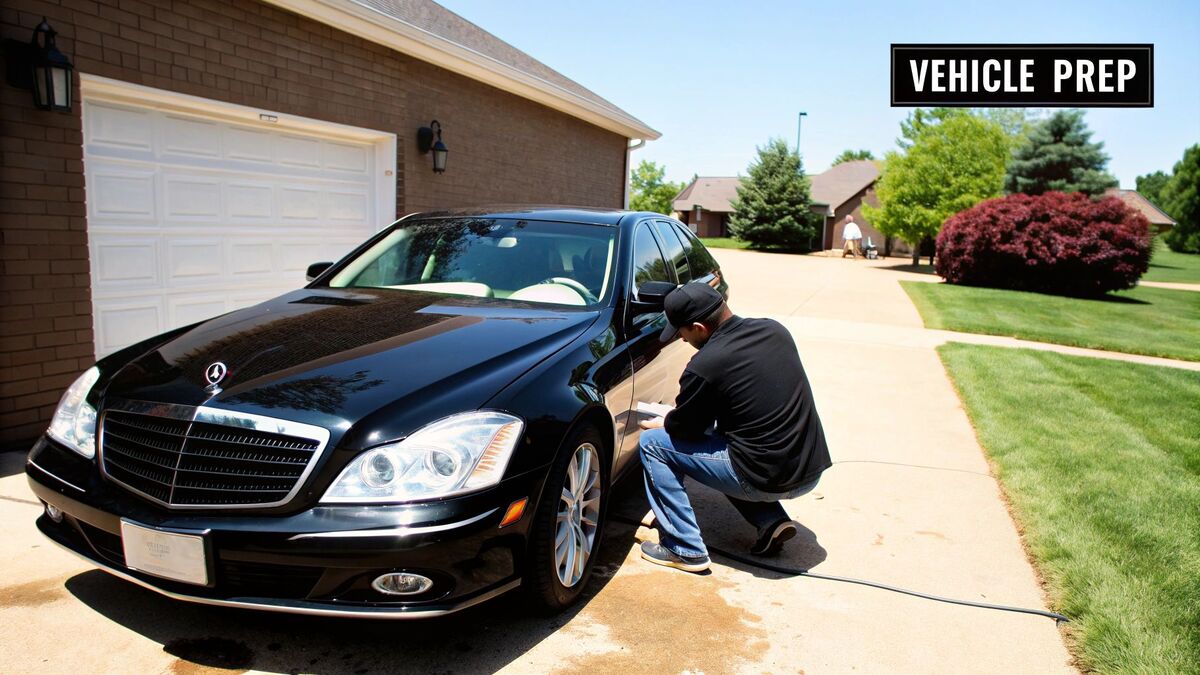
When selling your car privately, first impressions matter tremendously — think of it like staging a house before an inspection. A sparkling, well-presented car tells buyers you've taken good care of it, directly affecting how quickly you sell and for how much. Start by completely decluttering the interior — remove every personal item so buyers can picture themselves owning it.
The deep clean that adds value
- Tackle the interior — vacuum carpets, seats, and the boot; clean the dashboard and inside windows.
- Make the exterior shine — a thorough wash and wax (wax can hide fine scratches), plus clean wheels and tyres.
- Don't forget the engine bay — a simple wipe-down shows you've cared for the car inside and out.
A car that looks cared for is a car buyers will pay more for. Investing a weekend in preparation can easily add hundreds of dollars to your final price by building immediate trust.
Address small cosmetic issues — a touch-up paint pen for stone chips, a headlight restoration kit for foggy lenses — and gather your logbooks, service history, and receipts for major work.
How to Value and Price Your Car to Sell
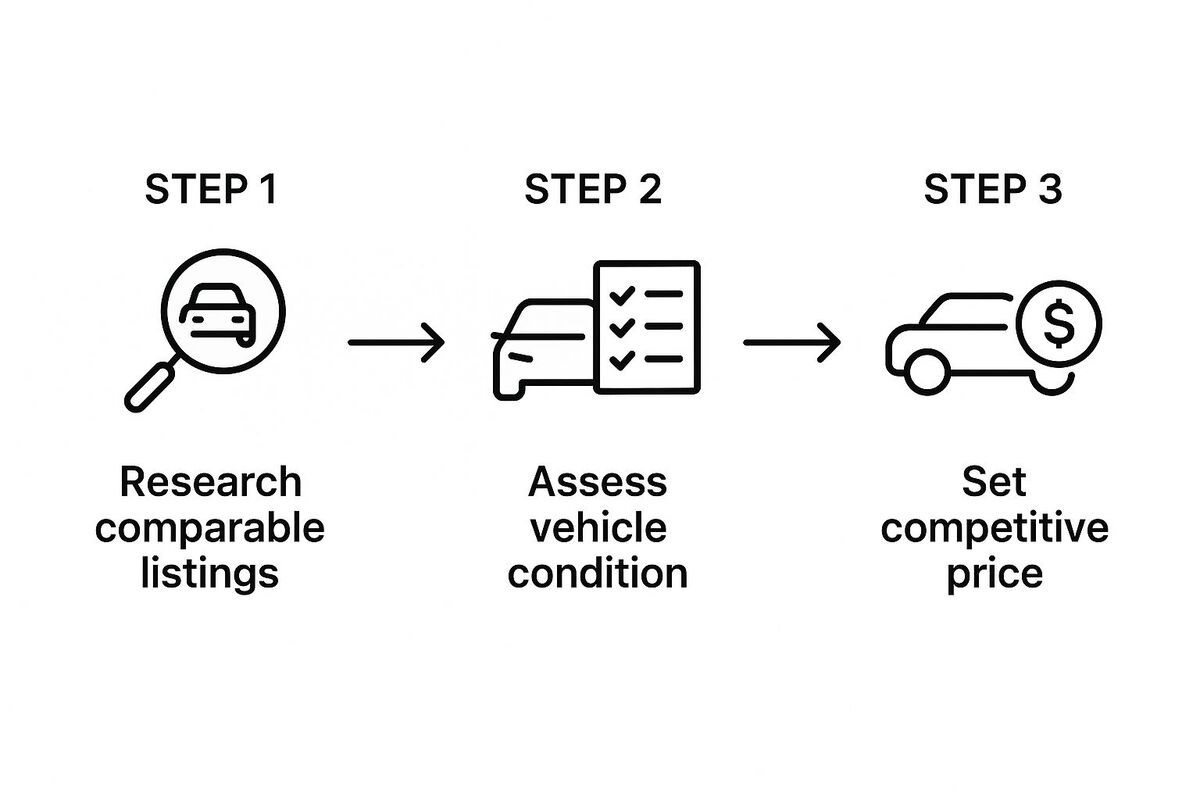
Online valuation tools are a starting point, but the best gauge is what similar cars are actually selling for. Search Carsales and Gumtree as if you were a buyer looking for your exact car, getting specific on make/model/year, kilometres, trim level, and condition.
Always set your asking price a little higher than the lowest you're willing to accept — a 5–10% buffer gives you room to negotiate.
If similar cars go for $13,000–$15,000 and yours has low kilometres and a perfect service book, price at the top of that range; if it has dings, price competitively in the lower half.
Crafting an Advertisement That Gets Responses
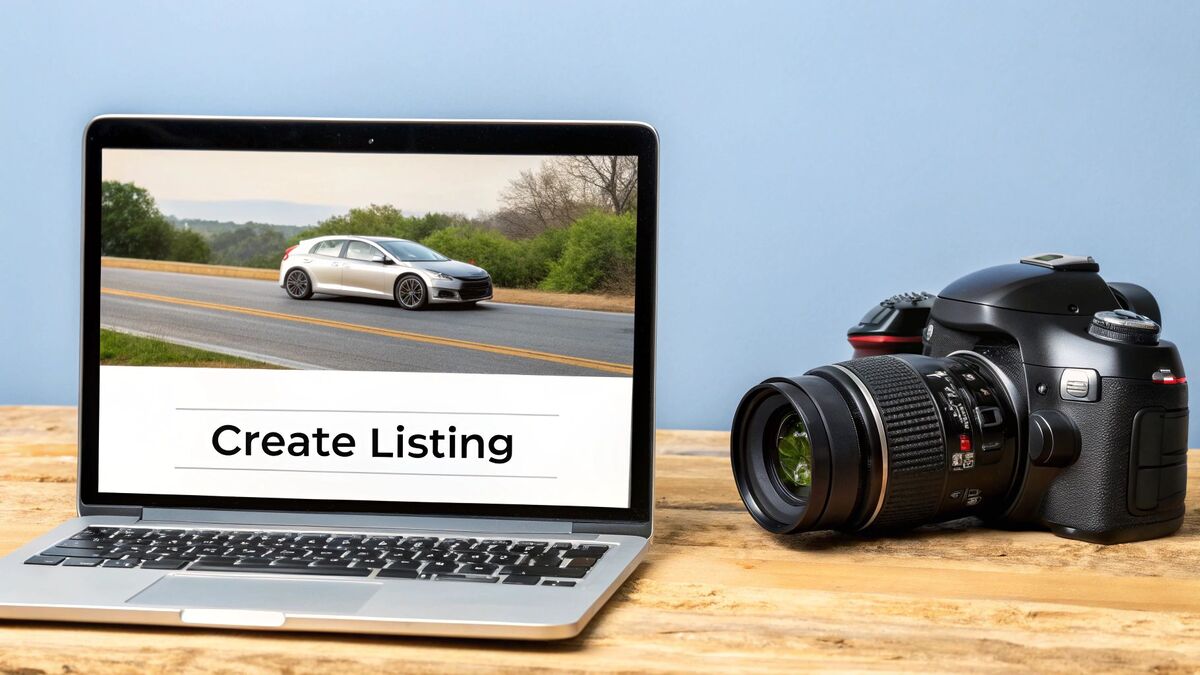
Your ad is your car's first interview. You don't need a professional camera — shoot during the "golden hour" (soft light after sunrise or before sunset) for soft light and true colour. Aim for 15–20 high-quality photos:
- The full tour — all four corners plus straight-on front, back, and sides.
- A look inside — dashboard, seats, boot, odometer, and special features.
- Wheels and tyres — clear shots showing tread.
- Honesty — photograph any scratch or chip; transparency builds instant credibility.
In the description, put the must-have details up top (year, make, model, trim, transmission, kilometres, rego expiry, service history, price), then bring the car's story to life with an honest reason for selling.
Managing Inquiries and Test Drives Safely
Serious buyers ask specific questions; low-effort "still available?" messages rarely go anywhere. A five-minute phone call tells you more than twenty texts. Always confirm a valid driver's licence before a test drive.
Never agree to meet someone without speaking on the phone first — a basic check that they're a real person.
- Meet on neutral ground — a busy public car park, not your home address.
- Licence first, keys second — photograph their licence and text it (with your location) to someone.
- You're the co-pilot — never let a buyer test drive solo.
- Set the terms — a 15–20 minute drive on a familiar route.

Nailing the Negotiation and Getting Paid
The first offer is almost never the buyer's best — a low-ball is testing the waters. Stay polite but firm and counter within your ballpark (that's what the 5–10% buffer is for). Justify your price calmly with facts: complete logbook, new tyres, low kilometres.
Never hand over the keys, registration papers, or documents until you've confirmed the full payment has cleared in your bank account. No exceptions.
Safest payment methods: a bank cheque (watch the teller draw it up), a direct bank transfer (PayID — wait until you see cleared funds, not pending), or cash for smaller sums (deposit it at your bank to check for counterfeits). Then draw up a receipt with the date, price, car details (make, model, VIN), and both parties' names and signatures.
Completing the Paperwork to Finalise the Sale
Getting the transfer of ownership right means you won't be liable for the new owner's fines or tolls. Officially notify your transport authority that the car is no longer yours — usually a section on the registration papers or a transfer form, signed by both parties, with the exact date and time recorded.
What's the deal with roadworthy certificates?
- Queensland and Victoria — you generally must provide a current RWC for a registered car.
- New South Wales — a pink slip is for annual renewal, not always just to sell unless rego has lapsed.
- South Australia and Western Australia — typically no RWC required for standard private sales.
A simple, clear receipt is your best friend if disagreements arise later — it formally documents the sale and confirms the car was sold "as is, where is".
We offer competitive cash prices with on-the-spot payment and free towing anywhere in Adelaide.