
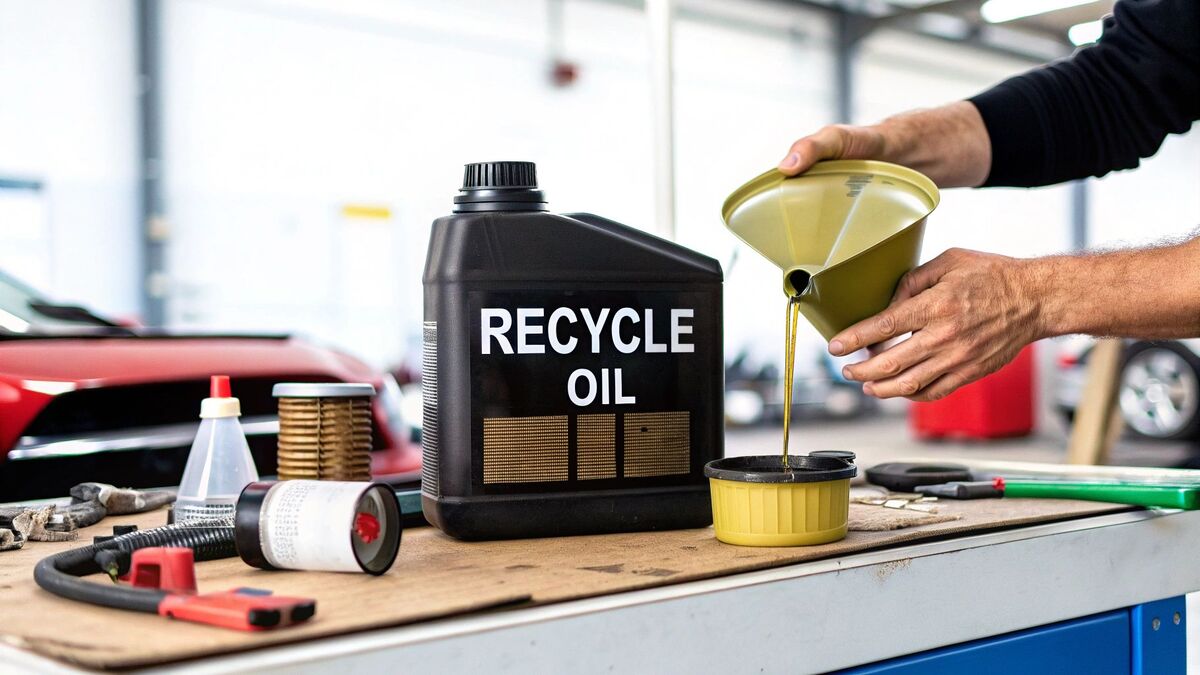
Recycling engine oil properly matters more than most people realise. A single litre of used oil can contaminate up to one million litres of fresh water — which is why getting disposal right protects local rivers and groundwater systems.
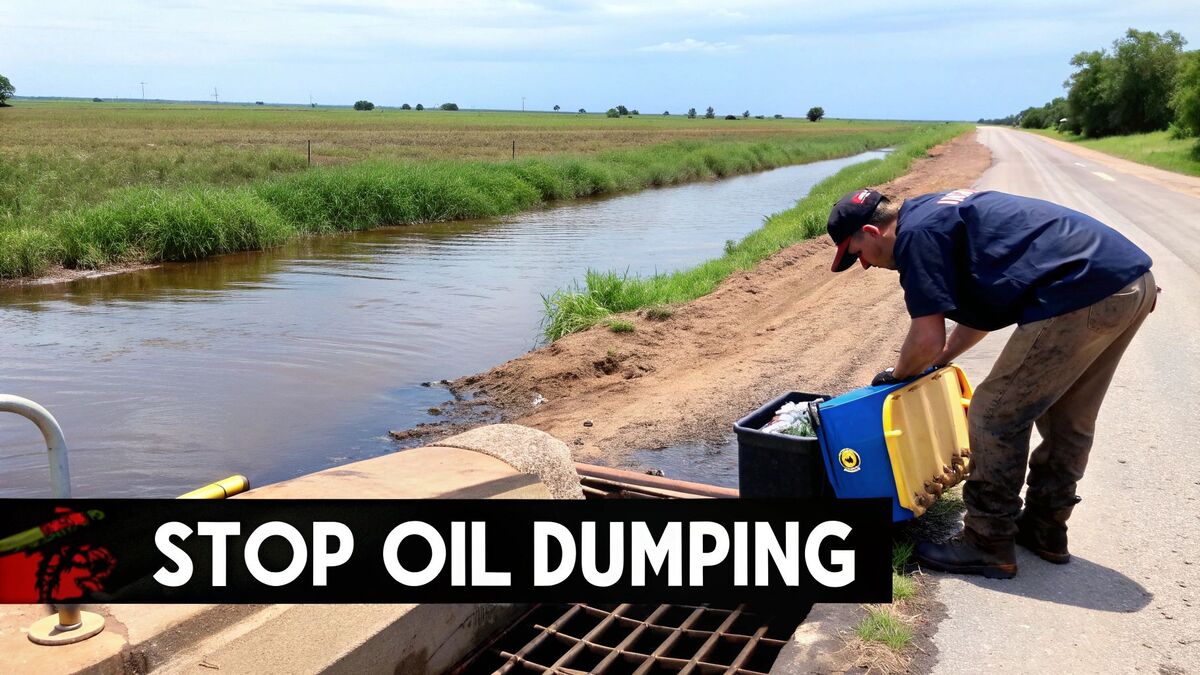
Why You Should Never Pour Oil Down the Drain
It's easy to underestimate the impact of one person's improper disposal, but across Australia's DIY mechanics, dumped engine oil becomes a major waterway pollutant affecting everything from the Adelaide Hills to the coast. And when it isn't recycled, a genuinely valuable resource is lost.
The hidden value in used oil
Used engine oil doesn't simply "go bad" — it becomes loaded with particles and contaminants but retains a valuable base oil that can be cleaned and reused. The re-refining process involves several stages:
- Filtration — solid contaminants like metal shavings and sludge are removed.
- De-watering — water mixed with the oil is separated out.
- Re-refining — old additives and impurities are stripped away, leaving high-quality base oil ready for new applications.
By choosing to recycle, you're not just preventing pollution — you're contributing to a system that reduces our reliance on crude oil extraction and saves significant energy.
Australia generates roughly 350 million litres of waste lubricant oil annually. Shockingly, about 60% of that is simply burned for energy, and another 24% is exported for the same reason — a recoverable resource largely going up in smoke. Initiatives like the Northern Oil Refinery re-refine this waste into high-quality base oils domestically, benefiting both the environment and the economy.
Setting Up for a Clean and Safe Oil Change
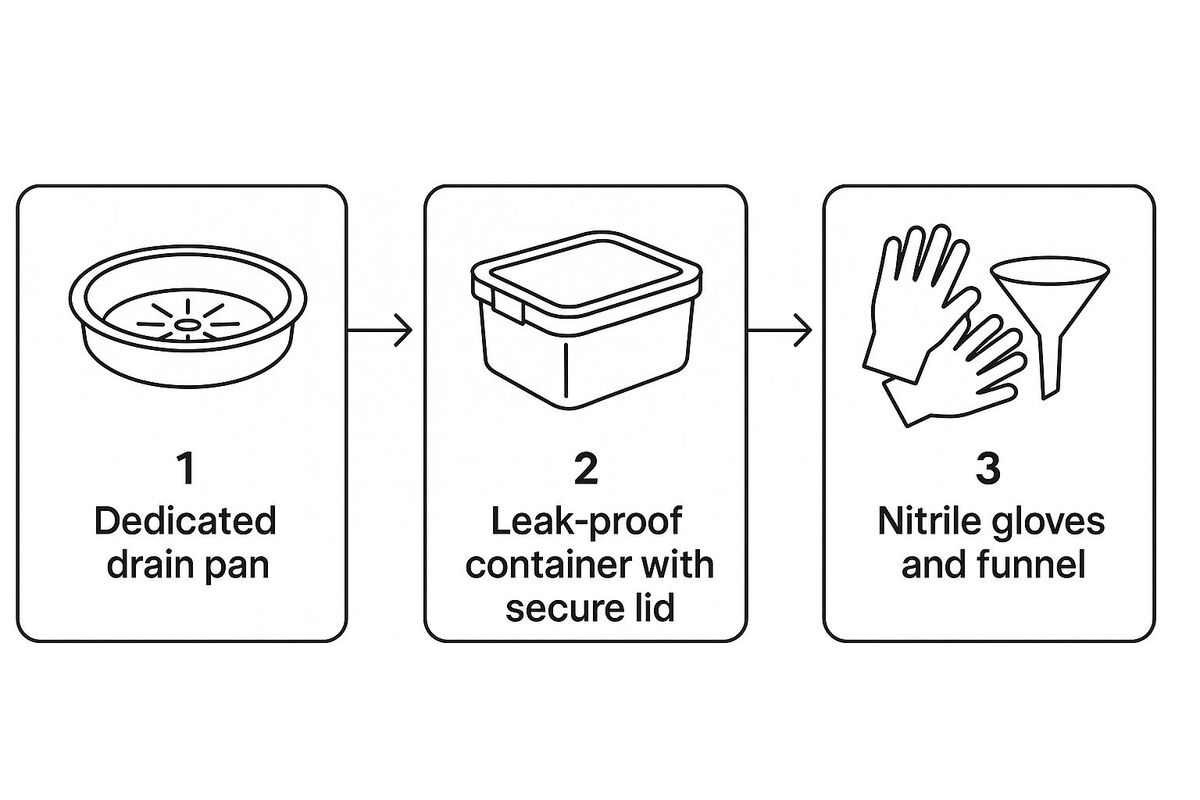
A successful oil change begins with proper preparation — rushing the setup guarantees a greasy mess and contaminated oil the recycling centre will reject. The most important piece of equipment is a proper drain pan: purpose-built pans are wide and low to catch the initial flow without splashing. Once drained, you'll need a clean, leak-proof container with a secure lid; the original oil bottle is ideal.
Essential tools for a clean job
- Nitrile gloves — used oil contains nasty contaminants, so protect your skin.
- Funnel — a clean, wide-mouthed funnel prevents spills when transferring oil to storage.
- Old rags or cardboard — lay these under your work area to catch unexpected drips.
Draining and Collecting Your Used Oil
Run the engine for a couple of minutes first — warm oil is thinner and flows faster and more completely (warm, not scorching hot). Position the drain pan under the sump plug, slightly rearward since oil shoots out at an angle initially. Loosen the plug with the correct spanner, switching to hand-tightening for the final turns, then pull it away quickly.
Allow five to ten minutes for draining. Meanwhile, remove the oil filter with a filter wrench, flip it upside-down over the pan, and let it drain for at least 15–20 minutes — most facilities accept old filters since the metal casing is recyclable.
Why avoiding contamination is everything
Recycling facilities re-refine used oil for new life. Even tiny amounts of coolant, brake fluid, or solvent can spoil the entire batch, potentially ruining hundreds of litres.
- One fluid only — never mix antifreeze, brake fluid, transmission fluid, petrol, or solvents into your used oil.
- Keep gear clean — wipe drain pans, funnels, and containers free of chemical residue.
- Separate and label — use different, clearly labelled containers for each vehicle fluid.

Storing and Transporting Your Used Oil
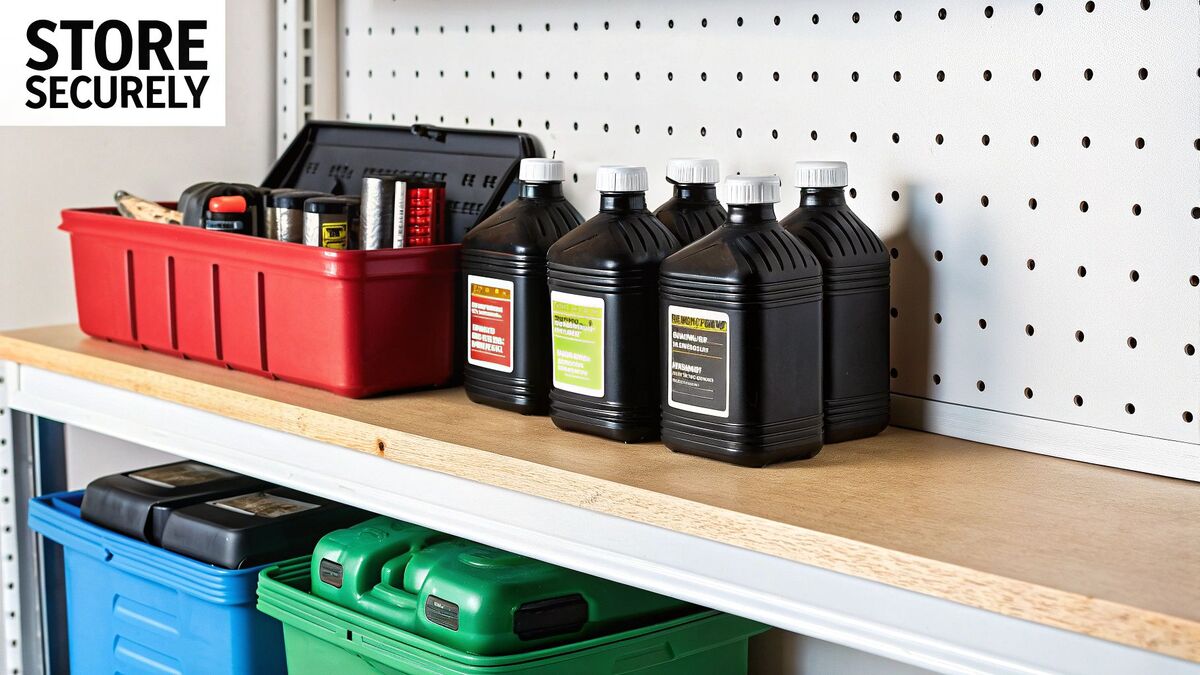
The best container is usually the original oil bottle — purpose-built, with a solid screw-on cap. Never use old soft-drink bottles or anything that held bleach, pesticides, or coolant. Store the sealed container in a cool, dry spot like a garage shelf, out of reach of children and pets, and clearly label it "Used Engine Oil".
Always double-check the lid. A loose cap can cause slow leaks and nasty, slippery messes on your floor.
When transporting, wedge the container upright in a corner of the boot, or place it in a sturdy box or milk crate so it can't slide or topple on turns. A drip tray underneath gives you secondary containment.
Finding a Used Oil Drop-Off Point
Australia has a solid network of drop-off points. Start with your local council's website — most operate resource recovery centres or transfer stations accepting used oil from residents, usually free. Beyond council depots:
- Auto parts retailers — big names like Supercheap Auto and Repco often have dedicated collection tanks, handy when shopping for supplies.
- Mechanic workshops — many will accept used oil, especially from regular customers; it's worth asking.
- Online locators — RecyclingNearYou.com.au lets you enter "used oil" and your postcode to find the closest collection points.
Always call ahead to confirm they accept oil from the public, check hours, and ask about limits — most places cap collection at 20 litres per visit.
Still Have a Few Questions?
Can I mix different kinds of oil?
Yes — you can pour used synthetic and mineral oils into the same container, as they follow the same recycling process. The golden rule is never to mix in other automotive fluids; coolant, brake fluid, transmission fluid, and solvents ruin entire batches.
How much can I drop off at once?
Generally up to 20 litres per visit at council depots and auto parts stores. If you have more, a quick call beforehand prevents a wasted trip.
What if I spill some oil?
Never hose it down the drain. Cover the spill completely with kitty litter, sand, or sawdust, let it sit a few hours to absorb, then sweep it up, bag it, and put it in your general rubbish bin.
We offer competitive cash prices with on-the-spot payment and free towing anywhere in Adelaide.