
So, you've got an old car taking up valuable space and you're ready to see it gone. Getting rid of it in Australia is usually painless, and you can often walk away with cash. The best path boils down to your car's condition and how much time you're willing to spend — selling to a wrecker for quick cash, trading it in, selling privately for top dollar, or donating it to a charity.
Deciding the Best Way to Dispose of Your Car
Is it a total non-runner, or a perfectly fine car you just don't need? The answer points you in the right direction. Around 850,000 vehicles hit the end of the road in Australia each year.
Your top car disposal options
- Selling to a wrecker — the fastest way to get cash, especially for scrap, damaged, or non-running cars. Most offer free towing and handle the paperwork.
- Private sale — almost always gets you the most money if the car's in good nick, but it's the most work (advertising, calls, viewings).
- Dealership trade-in — super convenient if you're buying a new car, but the value is usually less than a private sale.
- Donation — no cash in hand, but the satisfaction of supporting a registered charity.
A Quick Checklist Before Your Car Gets Towed Away
Give it a thorough clean-out — check the glove box, under the seats, the boot, and side pockets. Then deal with the paperwork: cancel your registration and tell your insurer the car is no longer yours (only after it's collected).
Should you bother cleaning it?
- Selling to a wrecker? Don't waste your time — the value is in scrap metal and usable parts, not a shiny exterior.
- Selling privately? Absolutely — a clean, well-presented car helps you get a better price.
Choosing Your Best Disposal Option
Cash for cars services
The offer is mostly tied to the car's weight and the current scrap metal price, and it doesn't care about a few dings. The biggest perk is convenience — and a good company always includes free towing. If anyone tries to charge for collection, find someone else.
Selling privately for a higher return
If your car runs well, you'll usually get the most money privately — but it's the most work and risk. Always meet buyers in a busy public place, and never hand over the keys until cleared funds are in your account.
Dealership trade-ins and donations
A trade-in is peak convenience but you'll be offered less. Donation is a selfless option — just confirm the organisation is a legitimate, registered charity.
What Happens After Your Car Disappears?
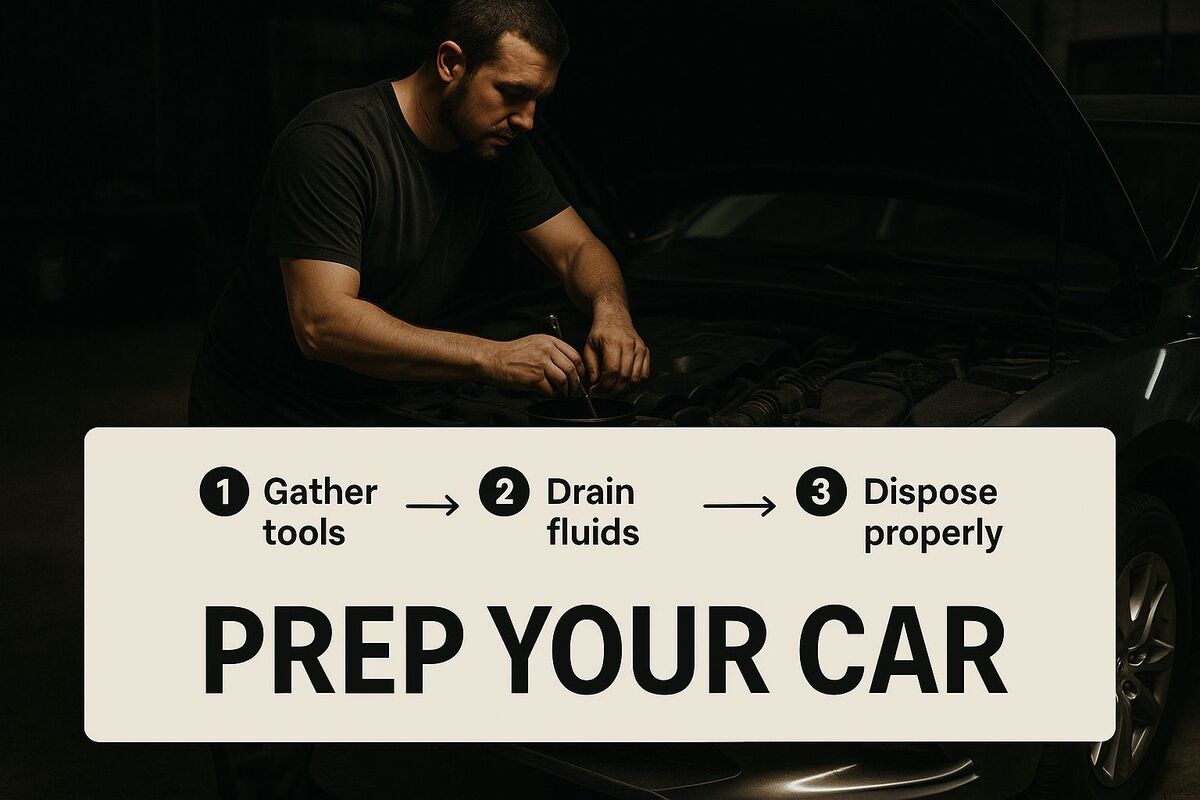
The first stop is the depollution bay, where every hazardous fluid is drained — engine oil, coolant, brake fluid, and leftover petrol — and collected for safe recycling or disposal. Then usable parts are salvaged:
- Mechanical bits — engines, transmissions, alternators, starter motors are tested and resold.
- Body panels — undamaged doors, bonnets, and guards are rescued.
- Interior components — seats, dashboards, even stereo systems.
The bare shell is then shredded; powerful magnets pull out ferrous metals, which are cleaned, melted down, and recycled into new steel — saving huge amounts of energy versus making steel from scratch.
Don't Skip the Paperwork
Sorting out the final paperwork is the only thing that legally protects you from future fines, tolls, or headaches. Lodge a "Notice of Disposal" (or your state's equivalent) with your transport authority right after the sale to take your name off the registration. It's also wise to create your own proof of sale including:
- Full names and addresses of both you and the buyer.
- The car's VIN, registration number, make, and model.
- The exact date, time, and agreed price.
- Signatures from both parties.
Answering Your Car Disposal Questions
Can I get rid of a car without the rego papers?
In most cases, yes — a good cash-for-cars service will take the vehicle without official registration papers as long as you can prove you own it (a valid photo ID and usually a signed declaration of ownership). Call ahead to check what they need.
How much is my scrap car actually worth?
It depends on make, model, weight, and the current scrap metal price. As a rule of thumb, a standard passenger car fetches $150–$500; heavier vehicles bring more. Always get at least three quotes.
Do I have to pay to get my old car towed?
No — any reputable removal service includes free towing as standard. If a company tries to charge or deduct a towing fee, treat it as a red flag.
We offer competitive cash prices with on-the-spot payment and free towing anywhere in Adelaide.