
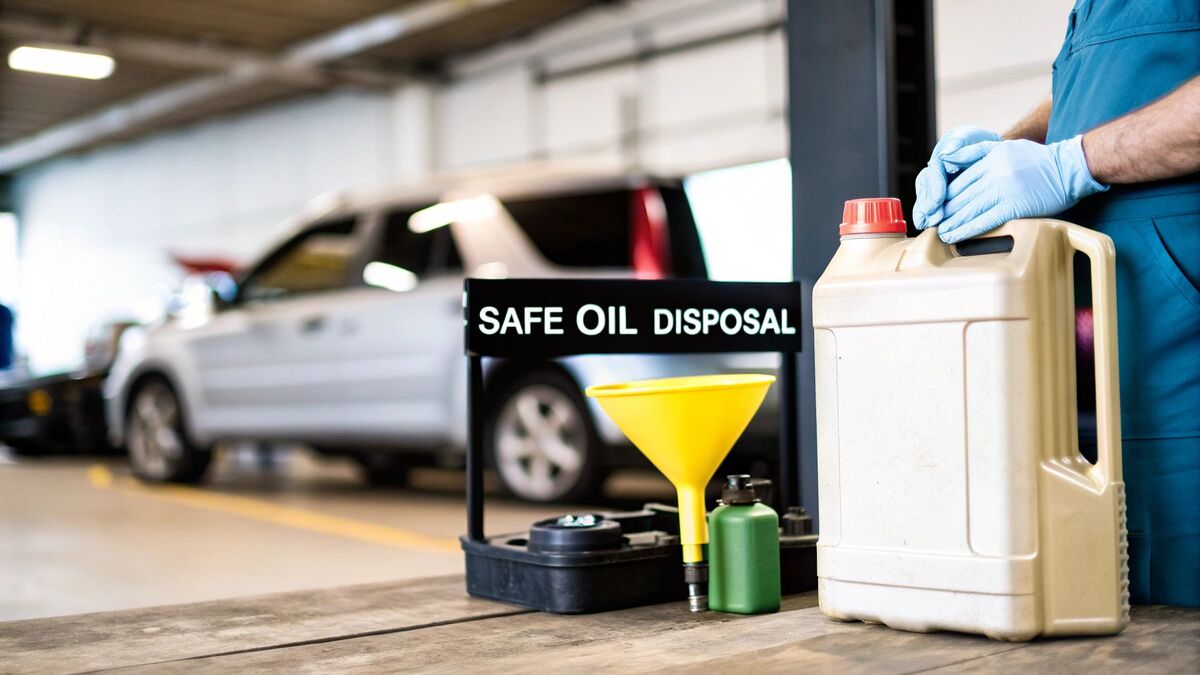
After completing an oil change, used motor oil must be taken to an authorised collection facility — your local council depot or major auto parts stores with recycling programs. Never pour oil down drains, into stormwater sewers, or onto the ground. It's illegal and causes severe environmental harm.
Why Proper Oil Disposal Is Non-Negotiable
Used motor oil isn't merely dirty — it's a toxic mixture. During engine operation, oil becomes contaminated with heavy metals including lead, zinc, and arsenic, plus numerous other harmful chemicals.
The environmental toll of improper disposal
A critical fact: one litre of used motor oil can contaminate up to one million litres of fresh water. The damage happens through several mechanisms:
- It wrecks aquatic ecosystems: oil forms a suffocating film on water surfaces, blocking sunlight and oxygen, killing aquatic plants, fish and wildlife.
- It poisons the soil: ground-dumped oil sterilises soil, destroys beneficial microorganisms, and persists for years.
- It threatens drinking water: contaminated groundwater can reach aquifers supplying drinking water.
The legal consequences in Australia
Illegal oil dumping carries substantial penalties. Each state's EPA enforces strict regulations with on-the-spot fines ranging from hundreds to thousands of dollars, and escalated penalties for commercial operations.
Your Toolkit for a Clean Oil Transfer
Choosing the right container is crucial
Avoid old milk jugs or soft drink bottles — these plastics are too flimsy, degrade on contact with oil, and have unreliable lids. Use a purpose-built oil drain pan or a sturdy screw-top container made from high-density polyethylene (HDPE). The original bottle from your new motor oil works perfectly if completely empty.
The most critical feature is a secure, leak-proof lid. A faulty lid is the primary cause of transport spills.
The essential oil disposal toolkit
- Wide funnel — prevents splashes; one with a built-in screen catches a dropped drain plug.
- Nitrile gloves — protect skin from harmful contaminants.
- Rags or old towels — for immediate cleanup of drips.
- Cardboard/drip pan — a protective barrier for your driveway.
Once the oil is sealed, label the container with permanent marker: "Used Motor Oil".
Getting the Old Oil Out and Stored Securely
Run the engine for a couple of minutes first — warm oil flows quickly and carries more contaminants. Park on completely flat, level ground so oil doesn't pool in the sump corners.
The draining process
Slide cardboard under the engine bay and position the drain pan under the sump plug. Locate the sump plug (a hefty bolt at the bottom of the oil pan) and turn it counter-clockwise; finish the final turns by hand for control. Let it drain completely until it slows to a trickle.
When reinstalling the sump plug, avoid overtightening — a common mistake that strips oil pan threads. Tighten until snug, then a firm quarter-turn.
Don't forget the oil filter
The oil filter holds up to one litre of dirty oil, so it can't go in regular waste. Loosen it with an oil filter wrench, then turn it upside down over your drain pan and allow at least 12 hours to drain. Bag it for recycling alongside the used oil.
Bottling it up for the road
Pour the oil slowly through your funnel into the sealed container, screw the lid tight, wipe the exterior, and store it somewhere safe where it can't tip over — away from children and pets.
Locating an Authorised Oil Collection Facility
Australia maintains a solid network of authorised collection points. Authorised facilities have proper storage tanks and participate in regulated waste streams. Best starting points:
- Local council websites — detail waste facilities, transfer stations, or depots accepting used motor oil, typically free.
- State EPA portals — hazardous waste disposal resources and collection-point databases.
- RecyclingNearYou — a Planet Ark tool: enter your postcode and "motor oil" for nearby facilities.
A quick phone call before visiting always helps — confirm opening hours and any limits on quantities accepted at once.
Common Oil Disposal Mistakes and How to Avoid Them
Never mix your fluids
Never mix motor oil with antifreeze, coolant, transmission fluid, or brake fluid. Recycling centres re-refine petroleum-based oil; other chemicals contaminate the batch, forcing staff to reject it as hazardous waste. Use separate, clearly labelled containers for each fluid type.
Avoid using the wrong container
Flimsy milk jugs or containers without tight seals guarantee disaster. Also avoid filling to the brim — oil expands when heated, so fill to about 90% capacity.
Don't abandon your oil after hours
Leaving containers beside locked facility gates constitutes illegal dumping. If you arrive to locked gates, simply return home and try another day.
Got Questions About Oil Disposal?
What's this going to cost me?
Dropping off household-quantity used motor oil is almost always free. Most Australian collection points accept up to 20 litres at no charge, thanks to the government's Product Stewardship for Oil Program.
Can I just let it sit in the garage forever?
Not ideal — plastic containers become brittle over time and lids warp. Make drop-off part of the oil change ritual and recycle within a week or two.
What about the empty plastic oil bottles?
Once they've contained oil they're considered contaminated, so most councils won't accept them kerbside. Drain upside down for 24 hours, wipe the exterior, leave the cap off, and check your council's waste guide.
Is it okay to mix different kinds of motor oil?
Yes — combining leftover synthetic and conventional engine oil is fine; the re-refining process handles it. What you absolutely cannot do is mix in other fluids like coolant, brake fluid or solvents.
What happens to the recycled oil?
It gets re-refined into new lubricating oils or processed into fuel for industrial burners, giving it a second life and reducing the need for virgin crude oil.
Can I pour oil down the drain?
Never. It's illegal and causes severe environmental damage. Just one litre of oil can contaminate up to one million litres of water.
My container is a bit leaky. What should I do?
Place the leaking container inside a larger, sturdier bucket or tub to prevent spills during transport. Make sure to inform the staff at the drop-off point.
We offer competitive cash prices with on-the-spot payment and free towing anywhere in Adelaide.