
When you hand over your old car, wreckers aren't just eyeballing the shell—they're on the hunt for hidden value. A simple rust-bucket might fetch $150, whereas a late-model SUV with in-demand parts could land you $8,999 or more. These figures rest on three big factors: the weight of scrap metal, the resale value of reusable parts, and the current market buzz around your make and model.
A Quick Guide to Car Wrecker Payouts
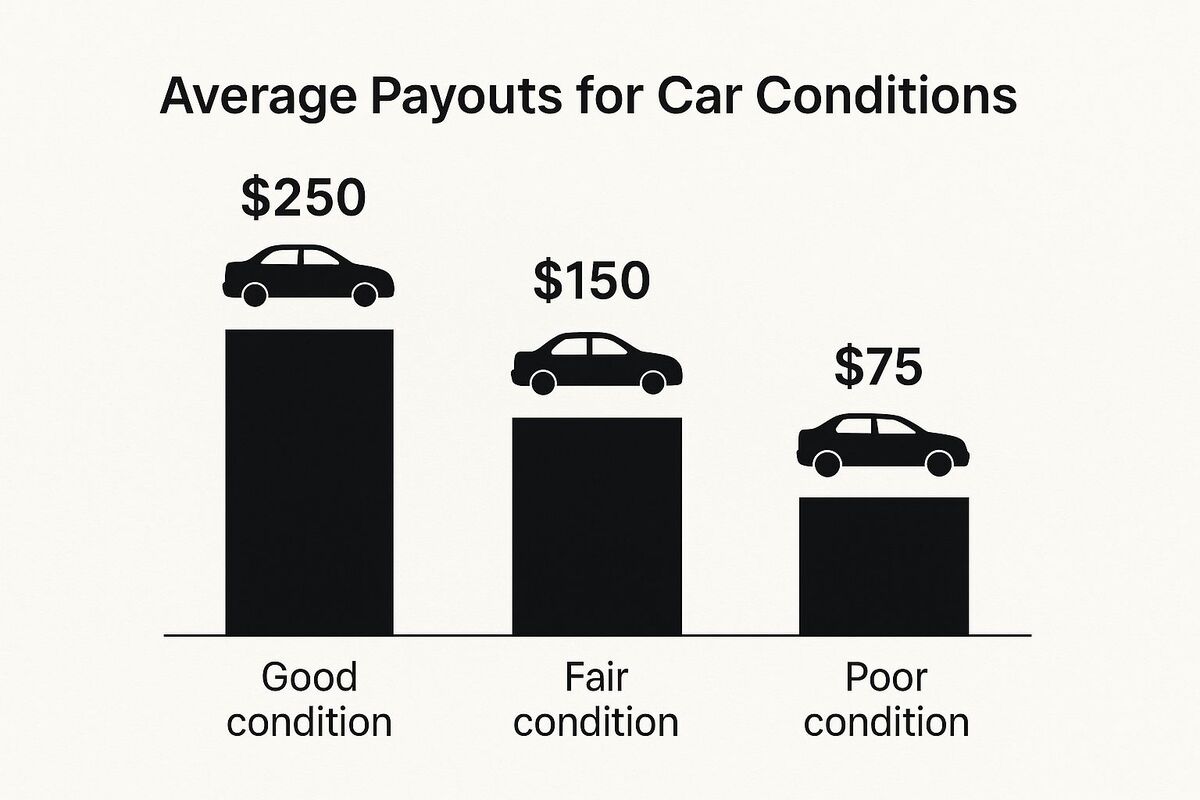
Think of your vehicle as a chest full of sellable treasures. The body panels might only fetch scrap-steel rates, but components like the engine, transmission and electronics hold most of the payout. Offers fall into familiar brackets depending on what can be salvaged:
- End-of-life vehicles — non-running 1995 Holden Commodore: $150 to $500
- Older complete cars — 2004 Toyota Corolla: $400 to $1,500
- Damaged late-model vehicles — 2018 Mazda CX-5: $1,500 to over $10,000
- High-demand 4x4s and utes — 2012 Toyota Hilux: $2,000 to $9,000+
These figures paint a clear picture, but every car tells its own story. Supply accurate details—year, mileage and damage levels—to help wreckers fine-tune their offer.
What Determines Your Car's Wrecking Value?
The answer is a bit more detailed than just quoting a price based on size or age. Wreckers aren't just buying a car; they're buying a collection of parts, each with its own potential value.
The make, model, and year equation
The first thing any wrecker will ask for is your car's make, model, and year. These three details are a powerful snapshot of market demand. A common vehicle on Adelaide roads, like a Toyota Hilux or a Holden Commodore, is a goldmine for parts, because thousands of them are still driving around and their owners constantly need spares. A rare European import might be a great car, but if nobody is looking for its parts, its value to a wrecker is mostly just its weight in scrap metal.
The rule of thumb is simple: the more popular your car model, the more its individual parts are worth. High demand for parts equals a higher cash offer for you.
Condition and completeness are key
A wrecker will look over the vehicle to figure out what's still usable. A car with a smashed front end might have a ruined engine, but the doors, seats, and gearbox could be in mint condition and ready for resale. Here's what they're looking for:
- Major mechanical components: Is the engine seized? Can the transmission still select gears? These are the big-ticket items.
- Body panels and interior: Doors, bumpers, headlights, and even the dashboard are all easily salvageable if they're in good nick.
- Completeness: A vehicle that's been picked apart for a few bits and pieces is worth less. A missing catalytic converter or alternator will definitely lower the offer.
Even a car that doesn't run is valuable, as long as it's whole. Always be upfront about the car's condition to get the most accurate quote from the get-go.
The Baseline Value of Scrap Metal
Before a wrecker even glances at your engine, they see your car as a big, heavy collection of metal. This is the absolute starting point for any cash offer. Even a car with zero working parts has a fundamental worth based purely on its weight. The primary metals driving this price are steel, which makes up most of the frame and body, along with smaller amounts of aluminium and copper.
Why scrap prices change
The price for these metals isn't set in stone. It fluctuates on a global commodities market, just like oil or gold. If there's a construction boom overseas, the demand for steel might surge, pushing prices up right here in Adelaide. This means the offer you get today might be different from the one you'd have received six months ago for the exact same car.
At its core, every car has a guaranteed minimum value determined by its weight in recyclable metals. This scrap value is the starting point from which wreckers add or subtract value based on salvageable parts and operational costs.
- Steel: The heavyweight champion — it makes up the bulk of your car's weight and forms the largest chunk of its scrap value.
- Aluminium: Lighter but more valuable per kilo than steel; found in the engine block, wheels, and some modern body panels.
- Copper: The most valuable of the common metals, hiding in your car's wiring and radiator.
How Salvageable Parts Drive Up Your Payout
While the weight of scrap metal gives your car a baseline price, the real cash is often hidden in its reusable parts. This is why two seemingly identical junk cars can get wildly different offers. These are the parts that really boost your final offer:
- Engine and transmission: A healthy, running engine or a gearbox that still shifts smoothly can add hundreds—sometimes thousands—to your payout.
- Catalytic converter: Packed with precious metals like platinum and rhodium, making it one of the most valuable single components.
- Alloy wheels and tyres: A good set without major damage, especially with decent rubber, adds instant value.
- Clean interior parts: An uncracked dashboard, seats without major rips, and intact door panels from common models are highly sought after.
A complete vehicle, even one that's a non-runner, is a full catalogue of potential profit for a wrecker. The moment you start pulling parts off, you shrink that potential and make their job harder, which naturally leads to a lower offer for what's left.
This is exactly why selling your car whole is the smarter play. A wrecker can match high-demand parts—the engine, gearbox, alloy wheels, and catalytic converter—to buyers who need them, while still recovering the low-value components for scrap. You can't realistically reach that network of parts buyers yourself, so handing over a complete vehicle lets the wrecker squeeze out value you'd never capture by parting it out piece by piece. For a simple process that gets you the most cash, your best bet is selling a car for scrap as one complete unit. Just give an honest, detailed description and you'll help the wrecker see its true value.
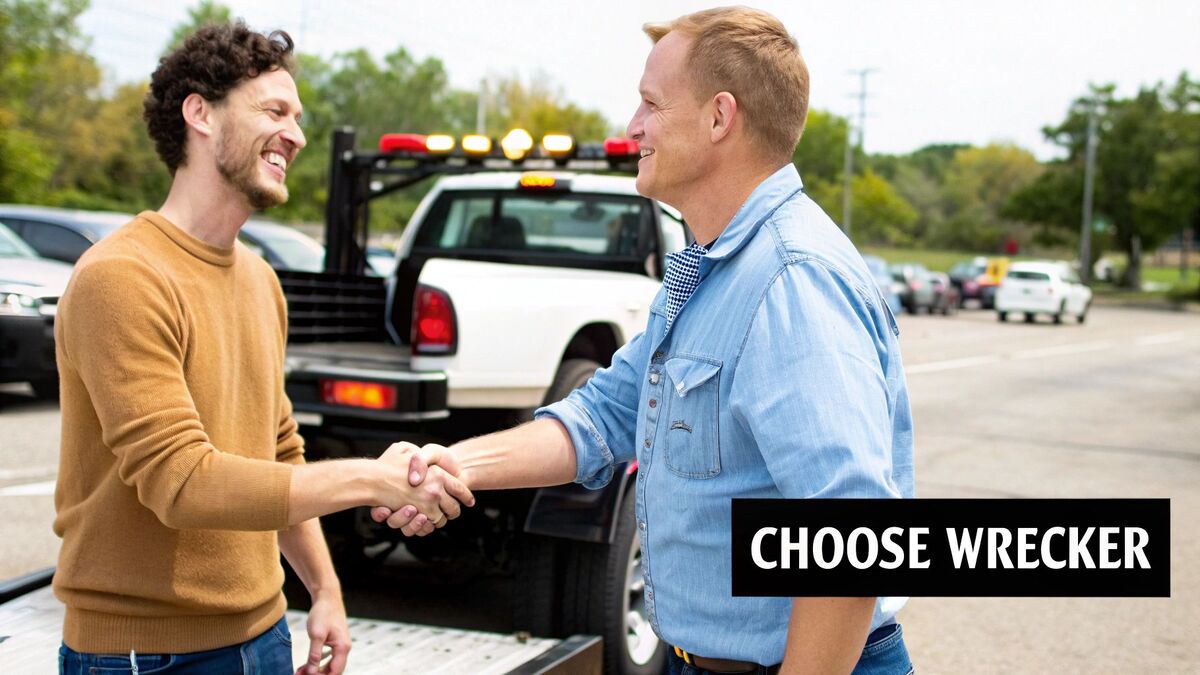
What's Really Going on Behind the Wrecker's Quote
When a car wrecker gives you an offer, that number isn't pure profit; it's what's left over after they subtract all their operational expenses. Getting your head around these overheads helps set realistic expectations and explains why quotes can vary so much between companies.
- Towing and transport: Even when towing is "free", that cost is still baked into the numbers — fuel, truck maintenance, insurance, and the driver's wages.
- Yard space and labour: Your car takes up valuable real estate in the wrecking yard, plus the skilled team needed to dismantle and process it. To put a number on it, a Victorian review of accident towing fees set daily storage costs at anywhere from AU$20.90 to AU$30.90 per day, depending on whether the car is kept outside or under cover—an expense that quietly eats into the offer.
- Environmental compliance: Wreckers are legally bound to dispose of hazardous materials—battery acid, engine oil, coolant, refrigerants—safely.
- The paperwork trail: Properly deregistering a vehicle and lodging the Notice of Disposal takes time and administrative effort.
A wrecker's final offer is a delicate balancing act. It has to reflect the real-world value of your car's salvageable parts and scrap metal, while also covering all the non-negotiable costs of towing, storage, environmental safety, and administration.
Your Questions Answered
Do I get more money if my car is still running?
Almost always, yes. The engine and transmission are the two most valuable parts in most vehicles — if a wrecker can see and hear them working, they know they can be salvaged and resold. A running car also saves the hassle of pushing it onto the truck, and that saving is often passed back to you.
What paperwork do I need to sell my car in Adelaide?
You'll mainly need proof that you own the car (your registration certificate is perfect) and a valid photo ID like your driver's licence. A professional wrecker will take care of the official disposal paperwork, including lodging a Notice of Disposal — your protection against any future fines or tolls.
Will I get paid more if I deliver the car myself?
It's worth asking. Most wreckers roll the cost of free towing into the final offer, so if you can safely bring the car in yourself, that saving can sometimes mean a slightly better payout. Just check with the wrecker first.
How do I get the best possible price?
- Be honest and detailed about make, model, year, and condition.
- Don't strip parts — a complete vehicle is far more valuable.
- Have your docs ready — proof of ownership and ID.
- Choose a reputable wrecker — licensed, insured, with solid reviews.
We offer competitive cash prices with on-the-spot payment and free towing anywhere in Adelaide.