
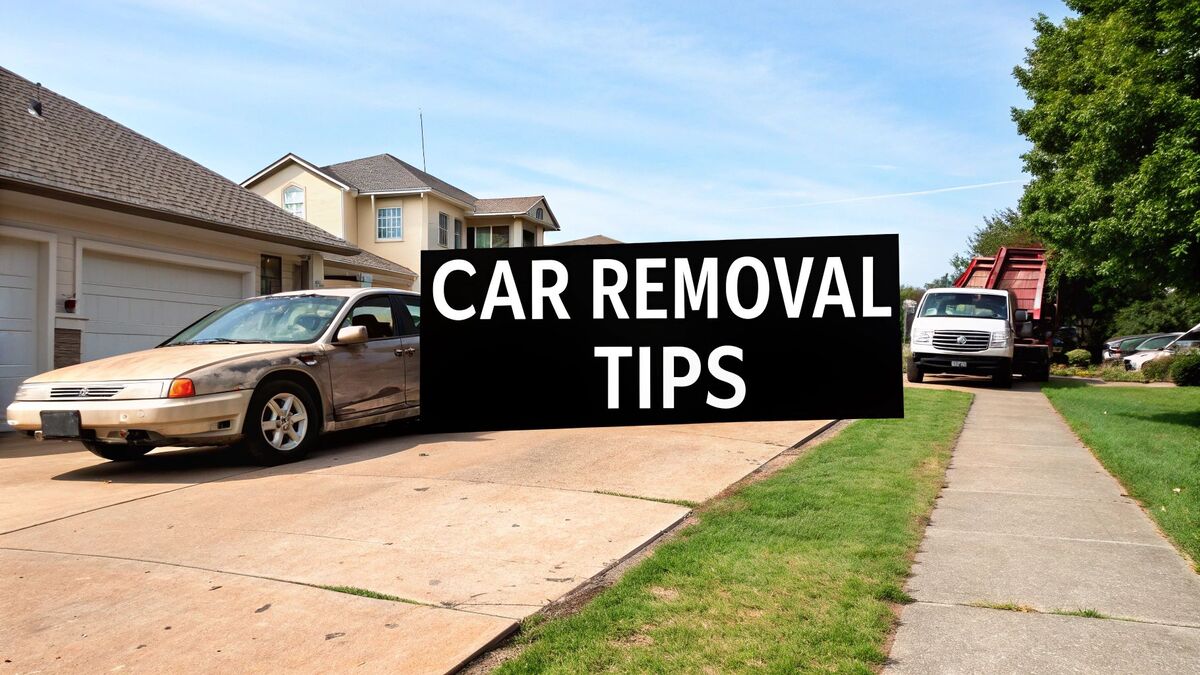
First Steps to Get That Unwanted Car Off Your Driveway
That car in your driveway has officially crossed the line from asset to eyesore. Before any big decisions, a few initial steps make the whole process smooth, legal, and maybe even put a little cash in your pocket — whether you end up selling, scrapping, or donating it.
What's the real condition of your car?
Be brutally honest about the state of the vehicle. Does it run safely and reliably, or is it a non-starter with serious mechanical gremlins? A car that just needs a clean and has a decent service history could be a great private sale; one with a blown head gasket, major rust, or significant accident damage is probably headed for the wreckers. Knowing its true condition keeps your expectations realistic.
Get your paperwork in order
This part is non-negotiable — without the right documents the process grinds to a halt. Make sure you can find:
- Proof of ownership — usually your registration certificate, proving the car is yours to sell.
- Service history — a logbook full of stamps adds real value for a private sale.
- Your driver's licence — needed as ID when completing the transfer paperwork.
Don't forget your personal stuff
Systematically go through every nook — the glove box, centre console, boot, and under the seats. Pull out personal documents, old receipts, chargers, and your favourite sunnies. A clean, empty car is more presentable and protects your personal information.
Choosing Your Path: Selling a Drivable Car
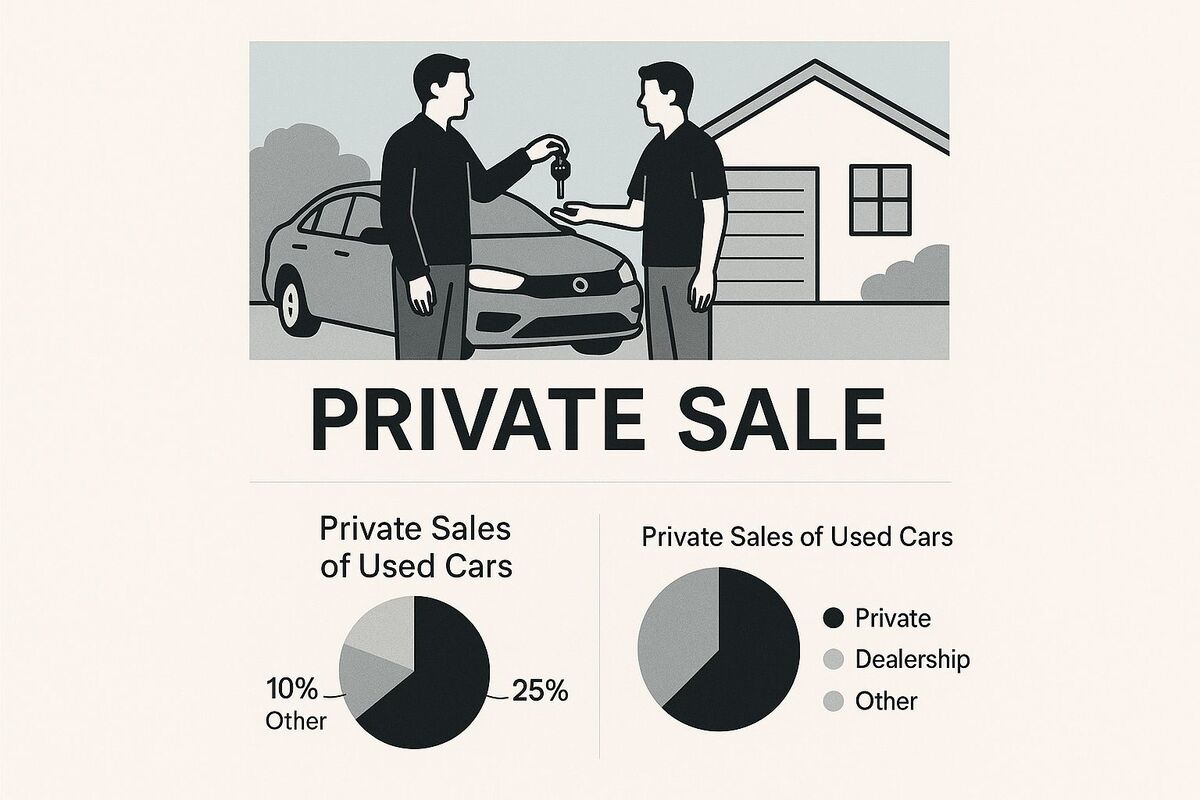
If your car still runs, selling it almost always puts more money in your pocket than scrapping. But the path you choose affects both your payout and the work involved — a classic trade-off between convenience and cash.
- Private sale — the highest potential return but the most effort: photos, ads, calls, test drives, and negotiation. Best for maximising profit when you have time and patience.
- Dealership trade-in — the lowest return but maximum convenience; ideal when you're buying a new car from that dealer.
- Used car buyer — a medium return for low effort; a quick, hassle-free sale for cash without buying another car.
A private sale demands the most work but pays the most. A trade-in is fastest but offers a wholesale price. Selling straight to a buyer is a solid middle ground — quick cash without the pressure of buying from them.

Handling a Car That Can No Longer Be Sold
So your car has reached the end of the road — too old, too damaged, or too unreliable to sell to another driver. You're no longer after a profit; you want a simple, responsible way to get it off your hands. That's where scrapping comes in, and it's surprisingly easy.
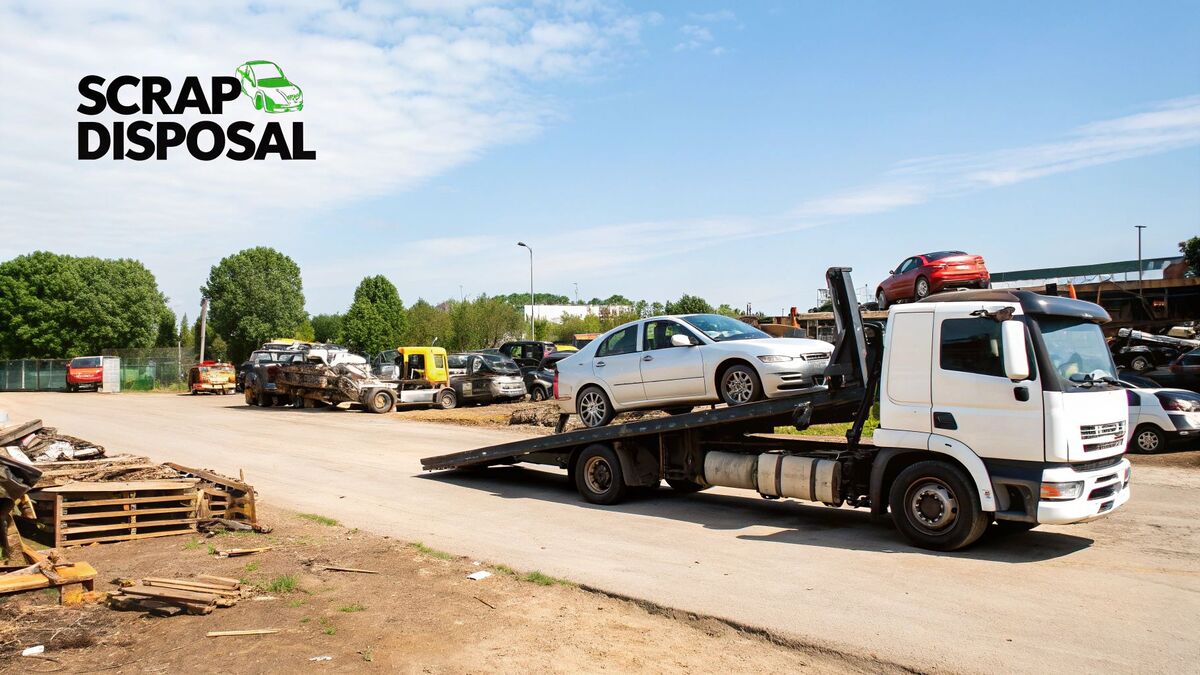
Get in touch with a specialist like Auto Removal Adelaide. We just need a few basic details — make, model, year, and an honest description of condition — and we'll give you a clear, no-strings quote. Once you're happy, we schedule a free pickup, often the same day, sort the paperwork, and tow it away. You're left with a clear space and cash in hand.
What really happens to your scrapped car?
- Draining all fluids — engine oil, coolant, brake fluid, and leftover petrol are removed and disposed of under strict environmental guidelines.
- Salvaging usable parts — alternators, starter motors, decent tyres, and undamaged panels are removed, cleaned, and sold as quality secondhand parts.
- Separating the materials — the bare shell is processed, with steel and aluminium separated from plastics, glass, and fabric for the right recycling streams.
This means your old car doesn't just end up in landfill. It becomes part of the circular economy, its materials repurposed into new products and reducing demand for fresh mining and manufacturing.
The Environmental Case for Responsible Scrapping
Letting a car rot in a field or sending it to a standard tip creates a toxic problem that lasts for generations. Engine oil, coolant, battery acid, and brake fluid seep into soil and poison groundwater if mishandled. A certified auto recycler drains every drop safely and follows strict rules to prevent pollution.
It's a massive issue here — every year about 850,000 vehicles reach the end of the road in Australia, creating roughly 1.36 million tonnes of waste, and nearly a third still winds up in landfill. Choosing a reputable service turns that waste back into a valuable resource.
It's not just metal, either — Australia produces around 160,000 tonnes of plastic waste from end-of-life vehicles every year. Professional, responsible recycling makes sure that material gets a second life instead of just ending up in landfill.
Responsible scrapping isn't just about disposal — it's about recovery. Every tonne of steel recycled saves around 1,100 kilograms of iron ore and 630 kilograms of coal.
Don't Forget the Final Paperwork
Watching the car get towed away feels great, but the job isn't done. Finalising the paperwork officially cuts your legal ties to the vehicle and protects you from fines or tolls that aren't yours anymore.
- Lodge a Notice of Disposal — tell your state transport authority you've sold the vehicle. In South Australia this is an Application to Note Disposal of a Vehicle, a simple online form that transfers responsibility away from you.
- Cancel your registration — if there's rego left, cancel it and often get a pro-rata refund.
- Call your insurer — cancel the policy to stop premiums immediately and claim any refund due.
Your Car Disposal Questions Answered
What if I can't find my registration papers?
Don't stress — while having them is ideal, it's usually not a showstopper. We can typically verify you're the owner with your driver's licence and the car's Vehicle Identification Number (VIN).
How do you calculate my cash offer?
It's based on a few key things: the car's weight (the biggest factor in scrap metal value), the make and model (some have parts in high demand), and overall condition (a complete set of alloy wheels or an intact catalytic converter bumps up the price). We weigh current scrap prices against the potential to salvage parts.
Should I scrap or donate my non-running car?
Donating is a generous gesture, but most charities want cars they can sell quickly. If your vehicle has serious mechanical problems, scrapping is usually the more practical and financially sound choice.
We offer competitive cash prices with on-the-spot payment and free towing anywhere in Adelaide.