
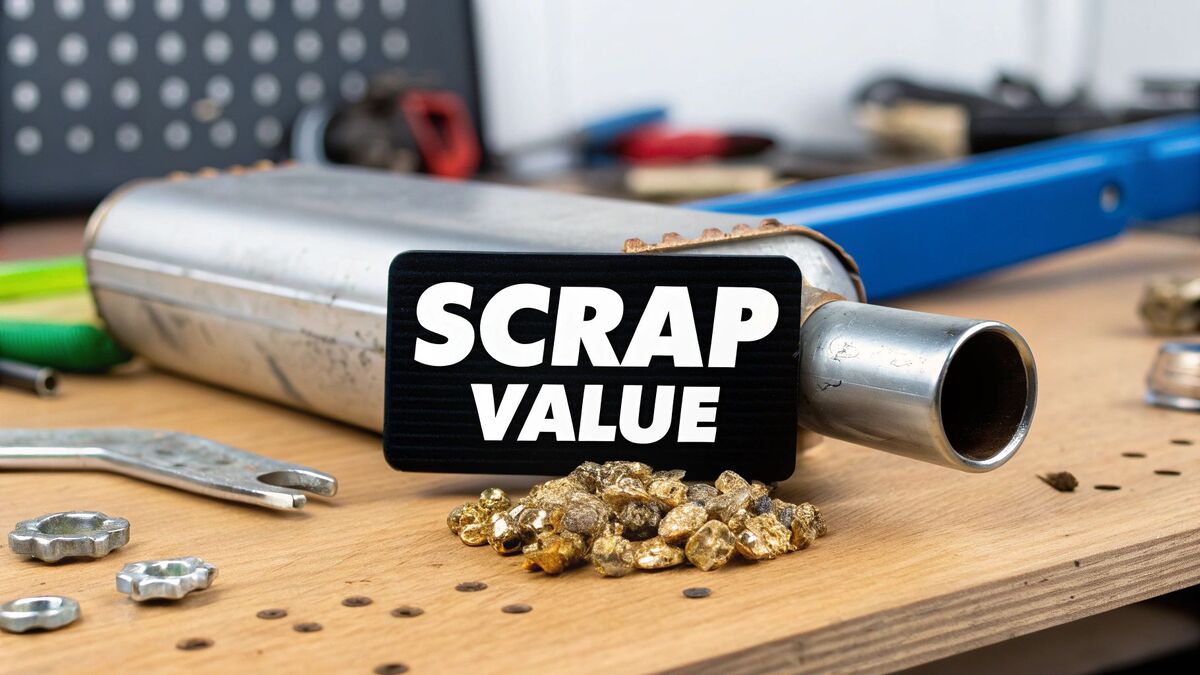
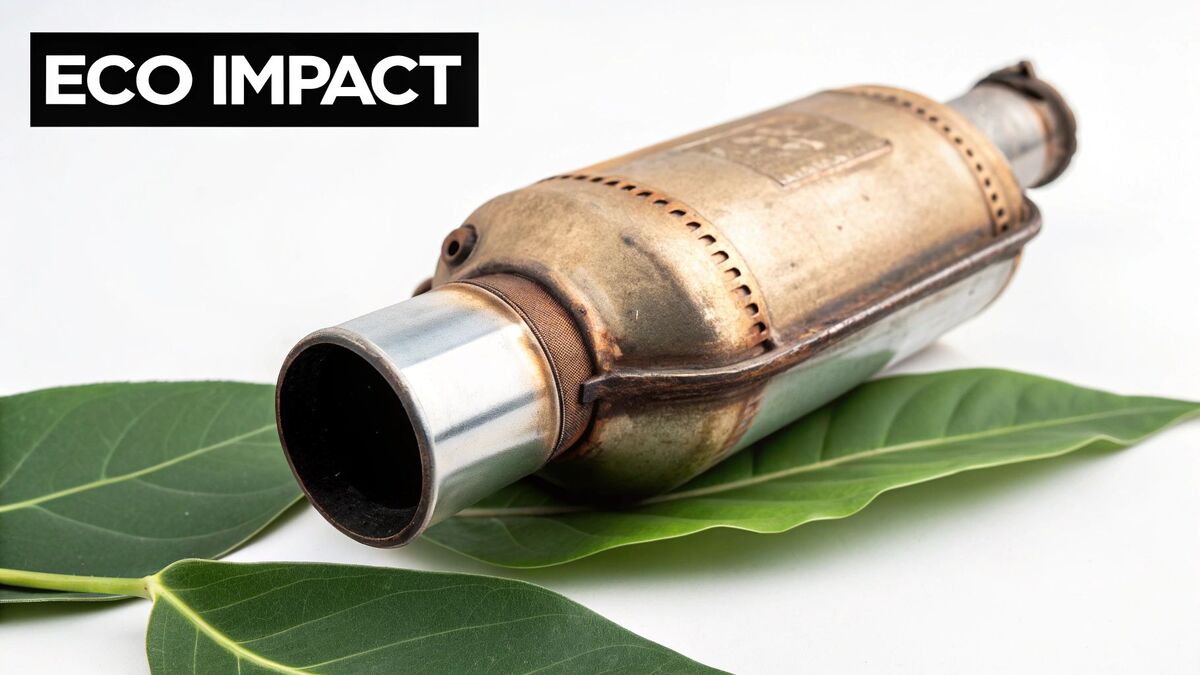
When considering scrapping your car, the catalytic converter often represents significant hidden value. In Australia, a single scrap catalytic converter can fetch anywhere from $250 to over $1,000 AUD, with the price varying based on internal precious metal content.
What Are Catalytic Converters Really Worth?
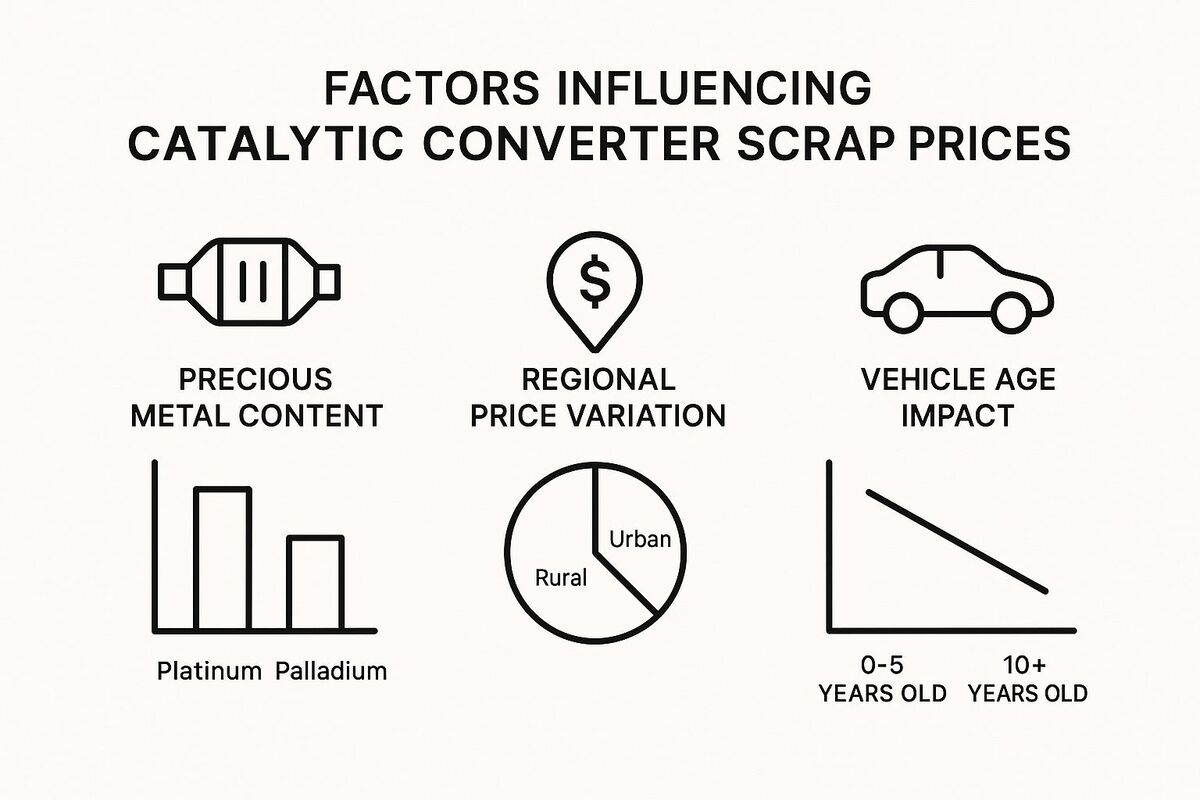
A catalytic converter is essentially a miniature precious metals repository on wheels. Its scrap value derives from microscopic deposits of platinum, palladium, and rhodium that serve as catalysts. The most significant factor is the live global market for precious metals, which fluctuates daily — when rhodium prices increase, the value of certain converters rises correspondingly.
The big things that decide your converter's price
- Original (OEM) vs aftermarket: factory-installed OEM converters contain substantially higher precious metal loads than cheaper aftermarket alternatives, so they consistently command higher cash values.
- Car type and make: high-performance vehicles, diesel utes, and European luxury cars typically feature converters with greater metal content to meet stricter emissions standards.
- Hybrid powerhouses: Toyota Prius converters are legendary in scrap markets due to elevated rhodium concentrations.
- Physical condition: converters with intact internal honeycomb structures fetch higher prices than damaged or empty units.
Scrap values for converters can change weekly, reflecting the volatile nature of precious metal spot prices.
What Makes a Catalytic Converter So Valuable?
The value lies hidden within its structure rather than in its steel casing. Three Platinum Group Metals coat a ceramic honeycomb in microscopic layers:
- Platinum (Pt): excellent at converting toxic carbon monoxide and unburnt fuel into less harmful substances.
- Palladium (Pd): works alongside platinum to tackle carbon monoxide and hydrocarbons, particularly in petrol engines.
- Rhodium (Rh): the genuine superstar, exceptionally effective at reducing nitrogen oxides back into harmless nitrogen gas.
Their prices fluctuate wildly like stock market shares, driven by global demand from automotive, electronics, and jewellery industries. Copper, aluminium, and brass contribute to total scrap worth too — recent Australian market data shows copper scrap can fetch between $5.00 to $10.00 per kilogram — but the tiny precious metal quantities completely overshadow everything else.
Why Not All Converters Are Created Equal
Converters with nearly identical appearances can command wildly different values, because larger, more powerful engines produce greater pollutant volumes, needing converters with substantially heavier precious metal doses. Converters from big diesel trucks or European luxury sedans almost consistently fetch more than those from standard family vehicles.
OEM vs aftermarket: the great divide
OEM converters come factory-installed to meet strict, long-term emissions regulations — high precious metal content, 10+ year durability, high scrap value, stamped with manufacturer identification. Aftermarket converters prioritise affordability with minimum precious metal quantities — low or negligible scrap value, often generic or unmarked.
High-value vehicle types
- Hybrid vehicles — Toyota Prius converters rank among the highest-value options.
- Diesel utes and trucks — big diesel engines need powerful, metal-rich converters.
- European & performance cars — BMW, Mercedes and Audi don't compromise on converter quality.
Converters typically last about 160,000 kilometres before degradation, so many older vehicles still contain valuable recyclable components.
How to Identify Your Converter and Get a Quote
Reputable buyers need specific codes revealing the unit's real worth. Serial numbers stamped on the converter's metal shell function as unique fingerprints, transforming vague estimates into dependable offers.
Don't just rely on your car's VIN. The serial number on the converter itself is the real source of truth.
To prepare for a quote:
- Take clear photos — well-lit images from multiple angles.
- Capture the codes — photograph serial numbers and brand logos in focus.
- Note vehicle details — the car's make, model, and year (e.g. 2012 Toyota Prius).
Selling a Scrap Converter: Step by Step
The goal isn't simply finding the nearest scrapyard — it's creating buyer competition. Target licensed scrap metal dealers, specialist auto wreckers, and dedicated converter recyclers, and create a shortlist of three to five buyers. Email or text your photos and serial numbers, include vehicle details, and request a firm quote.
A fair offer is always a transparent one. The buyer should be able to tell you exactly how they came up with their price.
When comparing offers, examine the grading process, payment terms (cash or transfer, how quickly), and any hidden fees. A reputable buyer will provide free car removal and pay you up to $8,999 on the spot.
Common Mistakes to Avoid
- Accepting the first quote without market comparison.
- Selling converters without serial number documentation.
- Engaging unlicensed or unprofessional buyers.
- Judging value by physical size rather than internal composition.
The physical size of a catalytic converter tells you almost nothing about its scrap value. The price comes down to the specific type and amount of precious metals inside its honeycomb structure.
Your Questions, Answered
Can I get a price without removing my converter?
Yes. Gather your make, model, and year, and if possible have a mechanic locate the serial number on the converter's shell — good dealers can identify the exact unit and provide an accurate quote.
Are scrap prices the same all over Australia?
Not entirely. Global precious metal markets set overall values, but dealer transport costs, local supply and demand, and individual yard overheads influence final offers. Get at least three quotes.
Why is an aftermarket converter worth so much less?
It comes down to internal composition — aftermarket units use the bare minimum precious metals needed to pass emissions testing, resulting in dramatically lower scrap value.
We offer competitive cash prices with on-the-spot payment and free towing anywhere in Adelaide.