
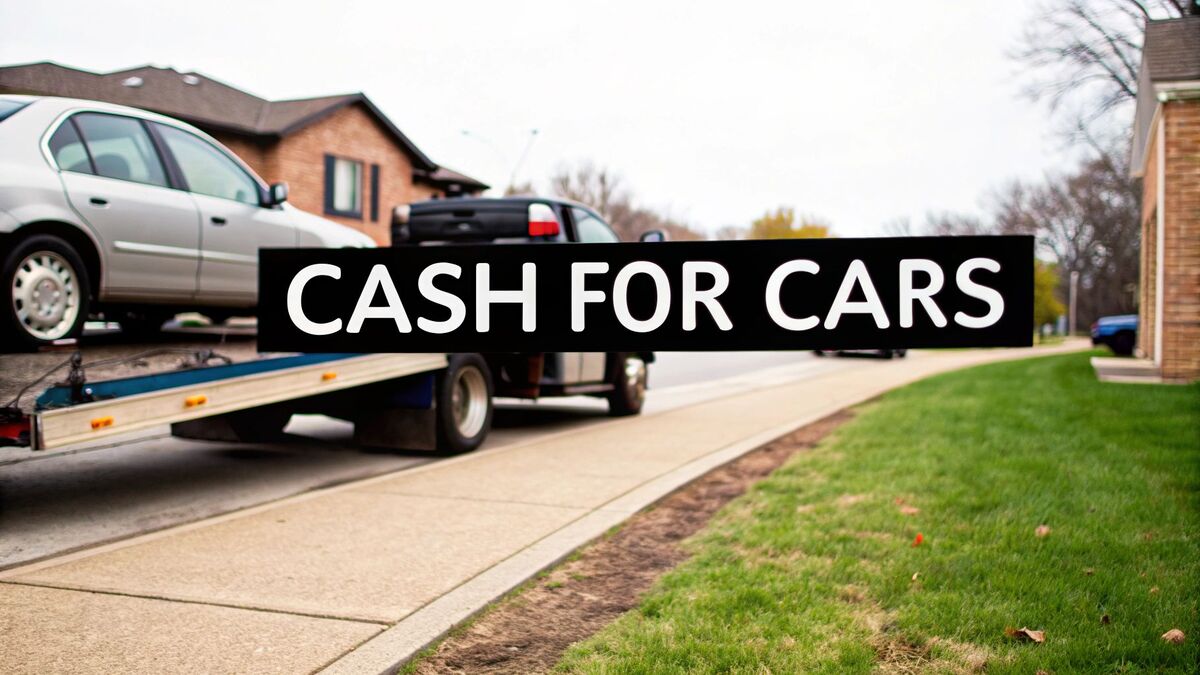
How the Cash for Cars Process Actually Works
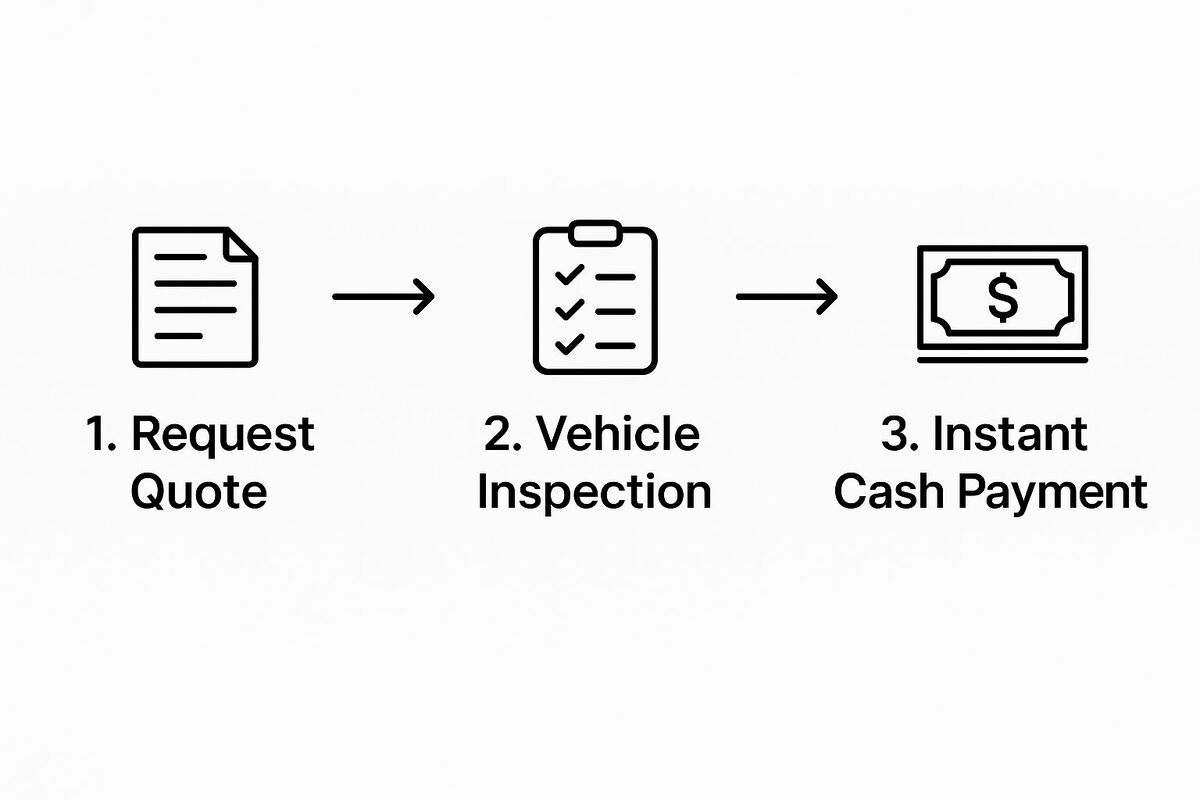
If you've got an old car sitting in the driveway, the cash for cars model is a beautifully simple solution. It skips the typical headaches of selling — no online ads, no fielding a million questions, no test drives with strangers who might not show up. The whole system is built for speed.
A look at the basic steps
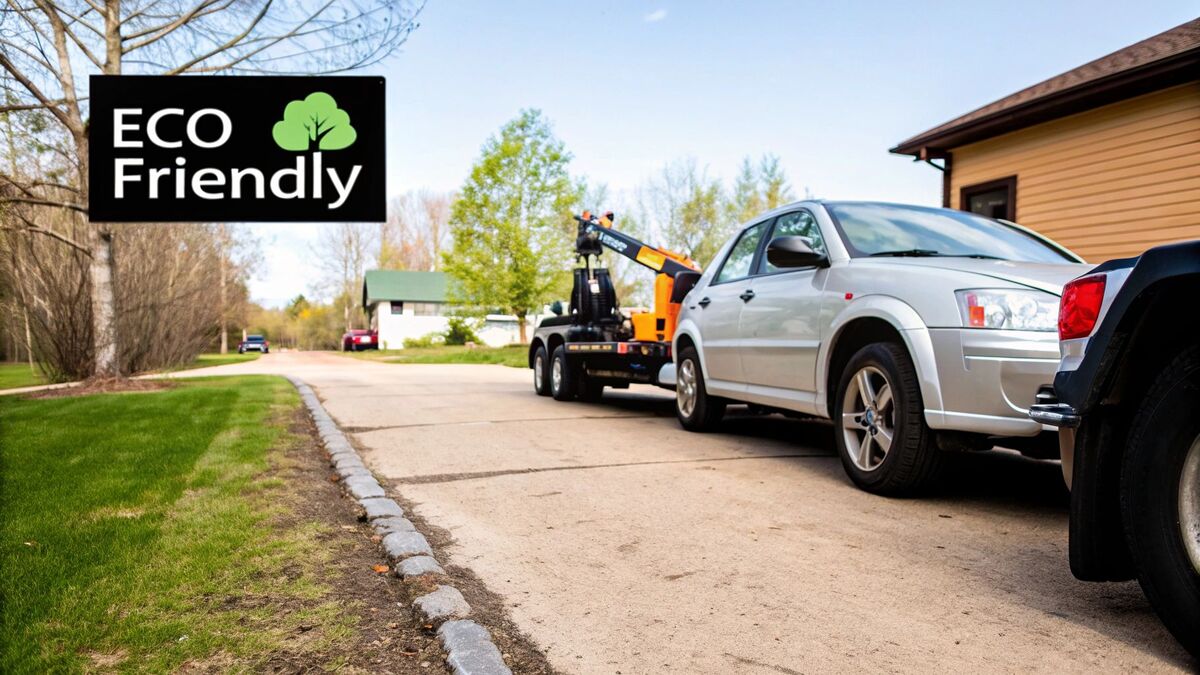
You get in touch with a car removal company, give them your vehicle's details, and they give you a quote right away. Happy with the offer? They find a time to come out, give the car a quick once-over, sort the paperwork, pay you on the spot, and tow it away at no cost. It's a real lifesaver for:
- Old clunkers that would cost more to get running than they're worth.
- Damaged cars where the repair bill just doesn't make sense.
- Unregistered vehicles you can't legally drive or easily sell on.
- Any unwanted car you just need gone quickly without the drama.
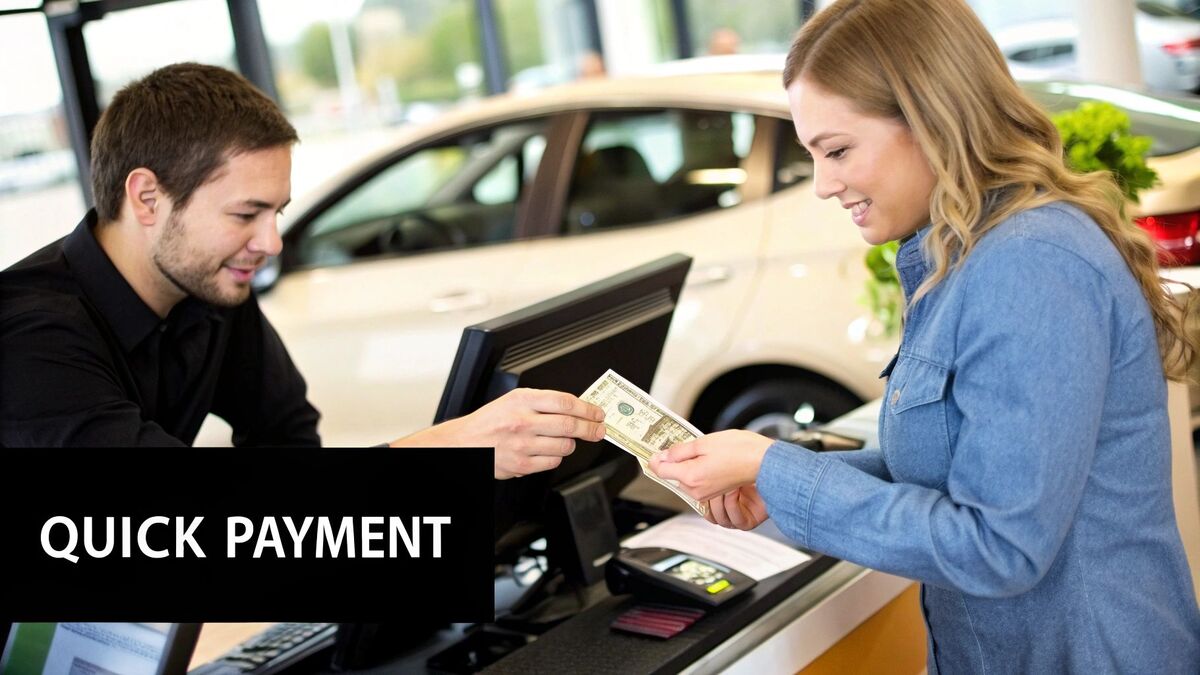
The real magic is in the speed and convenience — you can turn a car that's losing value into cash in your hand within a day, not weeks.
Estimating Your Car's Cash Value
A cash for cars service looks at value differently to a private buyer. They start with the basics — make, model, age, kilometres — but the final offer hinges on the car's current state, and comes down to two main things:
- Salvageable parts — the engine, transmission, alternator, even doors and bumpers have value if they can be refurbished and resold. Popular models with in-demand parts often fetch a better offer.
- Scrap metal weight — for cars truly at the end of the line, the worth comes down to weight in scrap metal, based on current prices for steel, aluminium, and other metals.
It pays to be realistic. A cash for cars buyer takes the vehicle as-is, which means they're already factoring in any faults.
Finding a Trustworthy Car Buyer
Not all buyers are cut from the same cloth, and a bit of due diligence saves a world of pain later. The most important thing to look for is transparency — a legitimate buyer holds a valid motor car trader licence, your assurance you're dealing with a registered, accountable business. Free towing is also non-negotiable; a surprise towing fee is a massive red flag.
- A solid local footprint — a physical address and a local phone number signal an established business.
- Good, recent reviews — look for consistent feedback about fair prices, punctuality, and a smooth process.
- Clear, honest quotes — a trustworthy buyer explains how they valued your car, and the offer makes sense from the details you gave.
Some operators give a fantastic quote over the phone, only to show up and drastically lowball you in person. Get your quote in writing.
Preparing Your Car for Handover
Spending 15 minutes getting things in order prevents dramas when the driver arrives. First, clear out all your personal stuff — check under the seats, the seat-back pockets, the centre console, and door pockets until they're completely empty.
Have your paperwork ready
Have your proof of ownership (the registration certificate is perfect) and your photo ID handy for the driver to sight. And think about access — if the car is wedged in a tight garage or down a long driveway, move it somewhere the tow truck can reach easily.
Finalising the Paperwork and Getting Paid
Before you celebrate, there's one crucial last step: the paperwork. Lodging a Notice of Disposal tells your state's transport authority (Service SA here in South Australia) that the car is no longer yours. Skip it and you could be on the hook for parking tickets, tolls, or fines the car racks up from then on. You'll generally need:
- The buyer's details — the company's name and licence number.
- The sale price and exact date.
- Your car's registration number.
With that done, cancel the car's registration (you may be due a refund for unused time) and call your insurer to cancel the policy.
Common Questions About Cash for Cars
Do I need a roadworthy certificate?
You absolutely don't. We buy cars as-is, so you skip the hassle and expense of inspections and repairs — a game-changer for older, damaged, or unregistered vehicles.
How much money will I actually get?
It depends entirely on your car — make, model, age, and condition. A newer model with in-demand parts could bring a few thousand dollars; a non-running car valued for scrap and salvage might fetch anywhere from $150 to $900. Get a couple of quotes to understand its true worth.
What's the final destination for my old car?
If it's still roadworthy it may be repaired and find a new home. If it's reached the end of the road, it goes to an authorised facility where hazardous fluids are drained safely, usable parts are salvaged, and the metal shell is crushed, shredded, and recycled.
We offer competitive cash prices with on-the-spot payment and free towing anywhere in Adelaide.