
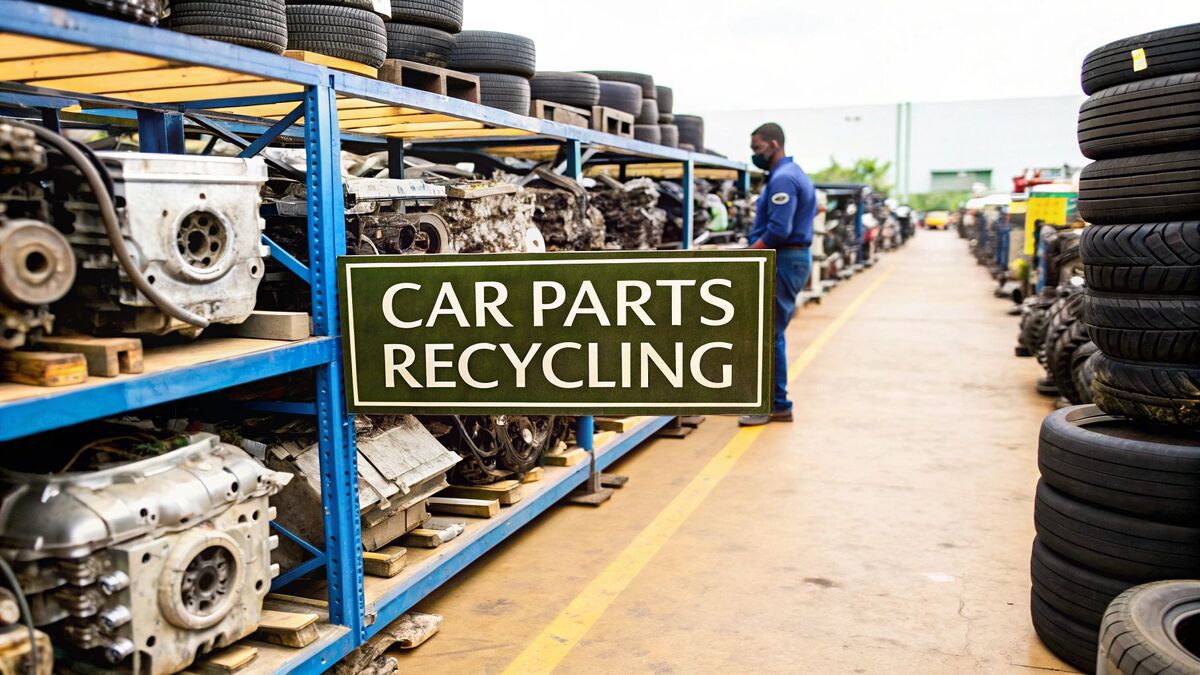
When a car finally reaches the end of the road, the modern approach is far more sophisticated than a rusty heap in a scrapyard: car parts recycling. It's the process of carefully dismantling old vehicles to salvage every useful component and material — less a graveyard and more an organ donor program for cars.
Why Car Parts Recycling Matters More Than Ever
Every year, around 850,000 vehicles are taken off Australian roads, creating roughly 1.36 million tonnes of scrap — and we only recycle about 70–75% of it. Flipping from a "use and toss" model to a circular one is critical.
An old car isn't just junk. It's a treasure trove of resources — its engine, transmission, alternator, and body panels can all be removed, tested, and put back into service.
The core benefits
- Environmental conservation — cuts demand for new raw materials and the energy-intensive mining behind them.
- Resource preservation — keeps valuable steel, aluminium, and durable plastics in circulation.
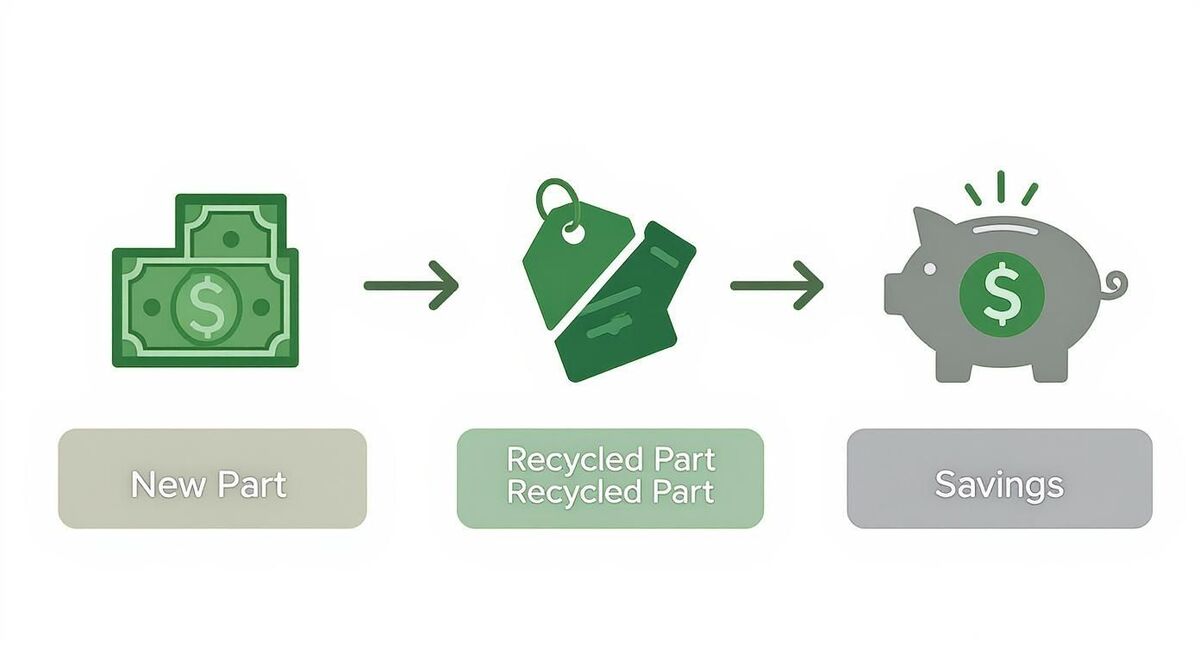
- Significant cost savings — recycled parts deliver OEM-quality components for a fraction of new prices.
How Recycled Auto Parts Save You Money
You're sidestepping the entire manufacturing cycle — mining, energy-hungry factories, global shipping, and marketing. The biggest savings come on major components:
- Engines and transmissions — a recycled, low-kilometre unit can be 50–75% cheaper than new.
- Alternators and starter motors — quality-tested recycled units do the same job for far less.
- Body panels and bumpers — a matching salvaged panel avoids costly new parts and paintwork.
Research shows Australian drivers could save a collective $15.5 billion over five years by opting for recycled parts — about $2,144 per driver.
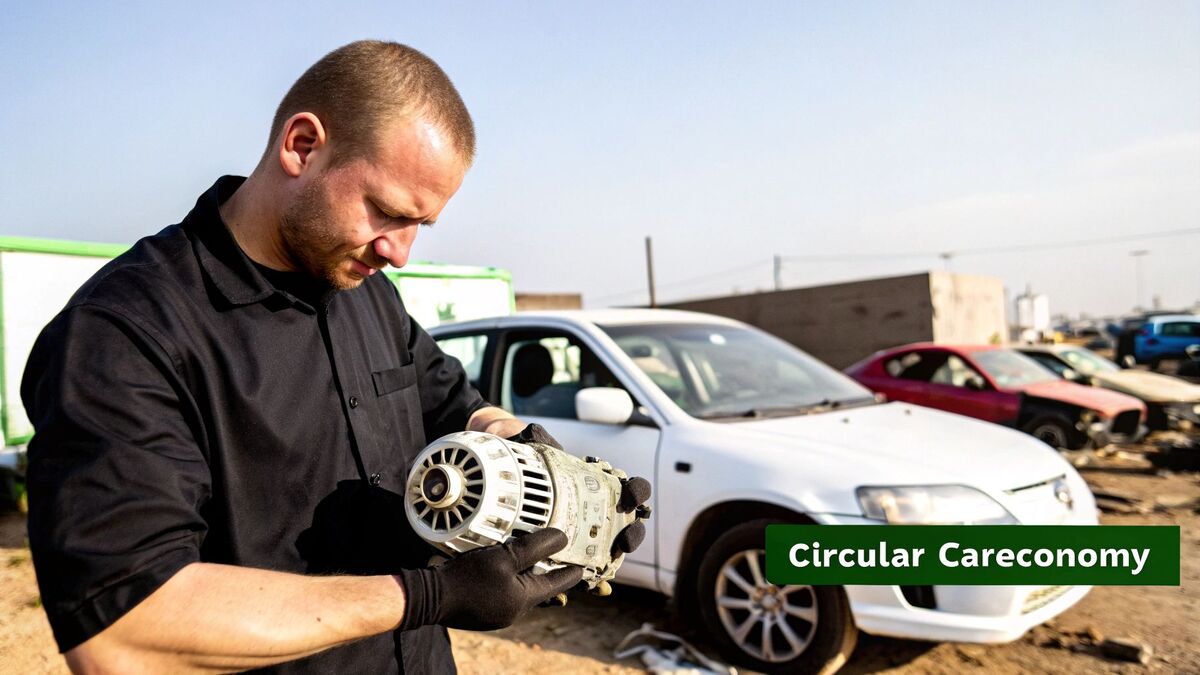
Every component a professional recycler salvages is carefully inspected, cleaned, and tested. Many reputable recyclers stand behind their parts with a warranty.
The Journey from Scrap Car to Reusable Part
Step 1: Depollution and fluid removal
Before a single bolt is turned, all hazardous fluids are meticulously drained — engine oil and transmission fluid, coolant and antifreeze, brake and power steering fluids, leftover petrol or diesel, even the air-conditioning refrigerant — and funnelled into specialised containers.
Step 2: Meticulous dismantling
Technicians carefully disassemble the car to rescue high-demand parts — engines, transmissions, alternators, starter motors — and valuable body panels in good nick.
Step 3: Inspection and quality testing
Every component is inspected and tested — an engine put through a compression test, an alternator checked for correct voltage.
Step 4: Cleaning and reconditioning
Each approved part is professionally detailed and, where needed, reconditioned close to factory specs.
Step 5: Cataloguing and warehousing
Every part gets a unique ID, is entered into a digital inventory, and is stored ready to find in a flash.
The Environmental Impact of Your Choice
Choosing a recycled part sidesteps the thirsty, energy-hungry process of making one from scratch:
- Steel savings — recycling steel uses roughly 74% less energy than making it from raw iron ore.
- Aluminium advantage — recycled aluminium needs up to 95% less energy than producing it from virgin materials.
Every reused car part is a victory for the circular economy — a system where we reduce consumption, minimise waste, and make the most of what we already have.

How to Responsibly Recycle Your Old Car
- Get your free quote — share a few basic details for a competitive offer.
- Accept the fair offer — once you're happy with the price, lock in a pickup time.
- Schedule free vehicle pickup — free towing anywhere in Adelaide, at your home, workplace, or mechanic.
- Receive instant payment — paid on the spot when the car is collected.
Common Questions About Car Parts Recycling
Are recycled car parts safe to use?
Yes — if you get them from a reputable recycler. Each part is inspected, cleaned, and quality-tested to meet safety and performance standards. A professionally salvaged OEM part is often a safer bet than a cheap, unknown-brand aftermarket part.
What kind of warranty can I expect?
Warranties vary by recycler and part, but any established business will stand behind what they sell. Always ask about warranty details before you pay.
Which parts are most commonly recycled?
Engines and transmissions; alternators, starter motors and AC compressors; body panels; and wheels and tyres.
How do I find a reputable car recycler?
Look for a solid local reputation, transparent pricing, a clear warranty, and good reviews — stick with licensed, established yards.
We offer competitive cash prices with on-the-spot payment and free towing anywhere in Adelaide.