
So, you're looking to sell a car in South Australia but don't have a roadworthy certificate. The big question is, can you actually do it?
The short answer is yes, you absolutely can. South Australia's rules are quite different from other states, giving sellers like you a lot more flexibility. You're legally allowed to sell a registered or even an unregistered vehicle 'as is' without needing to get that formal inspection certificate first.
This is great news, especially if your car isn't in perfect shape. Maybe it has a few mechanical gremlins, has been gathering dust in the driveway for a while, or you just don't want the hassle and cost of getting it roadworthy.
Essentially, you've got a few different ways you can go about this:
- Selling it privately to another person.
- Trading it in at a licensed car dealership.
- Getting an instant cash offer from a car removal service.
Each path has its own pros and cons, and knowing the difference is key to a smooth sale.
Why SA's Roadworthy Rules Are Different
If you've ever tried to sell a car in states like Queensland or Victoria, you'll know how strict their roadworthy certificate rules can be. But here in South Australia, things are refreshingly different. SA law allows private sellers to offload a registered vehicle 'as is'. This simple but crucial distinction shifts the responsibility from you, the seller, to the buyer. It's up to them to make sure the car is roadworthy after the sale.
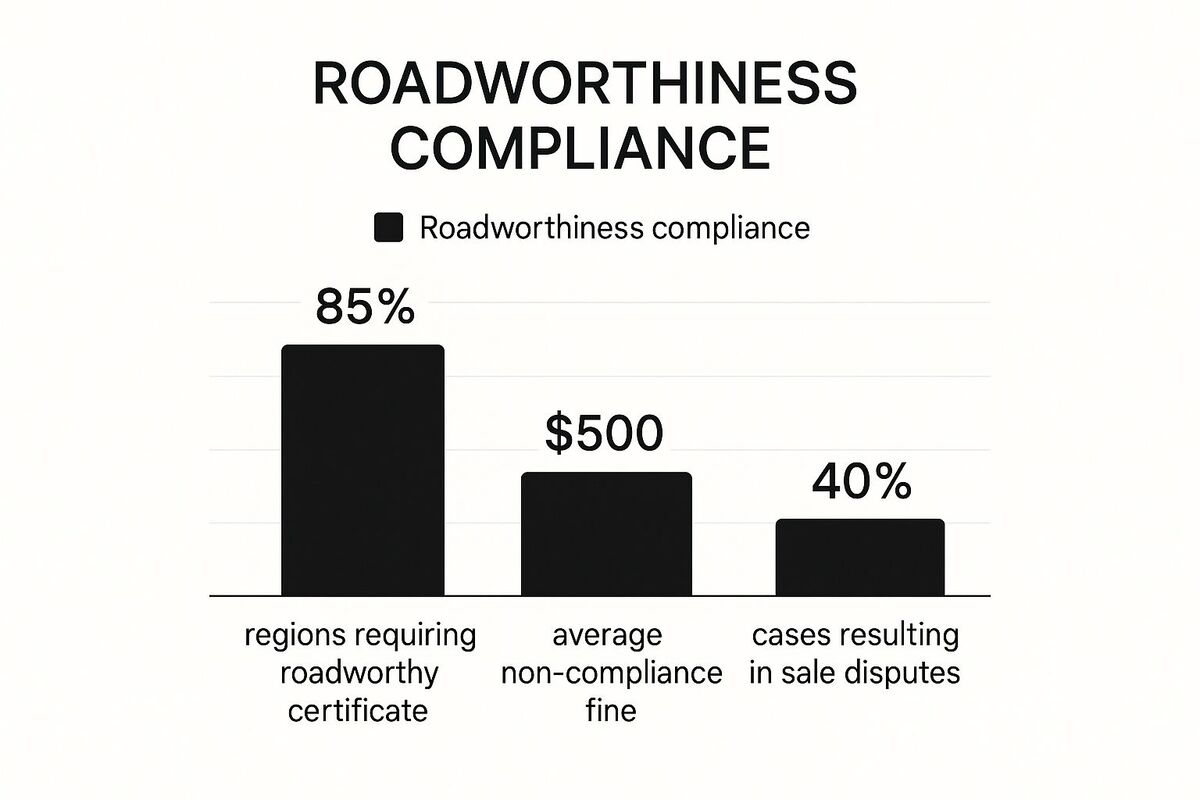
Roadworthy Certificate Rules for Private Car Sales by State
- South Australia (SA): No roadworthy required from the seller. Registered vehicles can be sold 'as is'; the buyer is responsible for roadworthiness.
- Queensland (QLD): Yes — a safety certificate is required for registered light vehicles before they're offered for sale.
- Victoria (VIC): Yes — a Certificate of Roadworthiness is needed when selling a registered light vehicle.
- New South Wales (NSW): Yes — an annual safety inspection (pink slip) is needed for registration renewal on cars over 5 years old.
- Western Australia (WA): Not typically required for private sales, but vehicles must be roadworthy to be driven on the road.
- Tasmania (TAS): Not required for private sales unless the registration has expired for more than 3 months.
This clearly shows just how unique the situation is in SA, offering a much more straightforward path for sellers with cars that might not pass a formal inspection.
The Reality of Selling Your Car As Is
Let's be honest: selling a car without a roadworthy certificate is a classic case of convenience versus cash. On the plus side, you get to completely sidestep the headache and expense of getting it repaired. It's the quickest way to get rid of a vehicle that you know won't pass inspection.
The catch? You're immediately narrowing down your audience. The only people interested will be bargain hunters, mechanics looking for a project, or scrap dealers. These buyers know the car needs work, so you can bet they'll negotiate hard, using the cost of future repairs as leverage.
Weighing Convenience Against Price
At the end of the day, that lower sale price is the fee you pay for a fast, hassle-free sale. Cars without a valid RWC can fetch anywhere from 15% to 40% less than their roadworthy counterparts. That's a pretty significant hit, so it's important to be prepared for it.
Choosing Your Best Sales Strategy
Going for a private sale often means you'll get the best price. But it also means you're the one writing the ads, fielding calls from tyre-kickers, and navigating some pretty low-ball offers. It's the most hands-on approach.
Then there's the dealership option. Trading it in is definitely quicker and a whole lot less fuss than a private sale. The catch? The trade-in value is almost always lower — you're essentially paying for the convenience.
Your third option is to go with a specialist car removal service. This is hands-down the easiest way to deal with a car that's damaged, unregistered, or just not worth the hassle of fixing. You get instant cash, they tow it away for free, and there's virtually no paperwork headache.
Getting Your Car Ready for a Successful Sale
Even when you're selling a car without a roadworthy certificate, a bit of prep work can make a huge difference to its appeal and the final price you get. The golden rule here is honesty. Always be upfront about any known issues or faults — this builds trust with buyers and helps head off any disputes down the track.
Before you do anything else, get your paperwork in order. You'll need to have essential documents like your proof of ownership and the registration certificate handy to fill out the notice of disposal. Finally, give your car a really good clean. A tidy interior and a washed exterior send a powerful signal that the car has been looked after.
How the Car Removal Process Works
So, you've decided that getting quick, guaranteed cash for your car is the way to go. Here's a look at just how straightforward the car removal process really is.
Step 1: Get a quick quote
It all starts with getting a free, no-strings-attached quote. You just need to give us the basic details of your car – make, model, year, and a quick, honest summary of its condition. Based on that, we'll give you an instant cash offer.
Step 2: Schedule a pickup time that suits you
Once you're happy with the offer, we'll sort out a pickup time that works around your schedule. Best of all, we provide free car removal in Adelaide and the surrounding suburbs, so you don't pay a cent for the tow.
Step 3: We collect the car and you get paid
On the day, our driver will show up at the agreed time, do a quick final check of the vehicle, help you with the necessary transfer paperwork, and then pay you cash on the spot. It's that simple.
We offer competitive cash prices with on-the-spot payment and free towing anywhere in Adelaide.