
When a car has finally given up the ghost, your first move is to turn that hunk of metal into cash. Before you even type "automotive recycling near me" into Google, gather the details every recycler will ask for — it makes you sound like you know what you're doing and helps you get solid, accurate quotes.
What to Have Ready Before You Call
- The make, model, and year — the first thing they'll ask.
- The vehicle's location — be specific with the suburb or postcode for the free towing.
- Its overall condition — be honest: does it run, has it been in a prang, is the engine or transmission missing?
- Proof of ownership — a title is perfect, but most services can proceed with your driver's licence and a signed declaration.
Spotting a trustworthy operator
- Clear licensing and insurance — a registered ABN and a willingness to provide their dealer licence number.
- Transparent quoting — a firm phone quote with free towing included and no hidden fees.
- Professional communication — courteous staff, clear answers, and no high-pressure sales tactics.
If a company gives vague answers or makes you feel pressured, just hang up and call the next one. There are plenty of great operators who'll make it easy.
Preparing Your Car to Maximise Your Payout
Give the interior a thorough sweep for personal belongings and rubbish — under the seats, deep in the boot, inside every compartment. If you're handy and have time, certain high-demand parts can fetch more sold separately: GPS units and aftermarket stereos, tyres and rims, and newer batteries. Just be upfront with the recycler about which parts you've removed.
For the paperwork, the key document is your proof of ownership (the title or registration certificate); if you can't find it, most recyclers can help with your driver's licence and a declaration of ownership. Once the car is gone, remove the number plates to return to your transport authority, and call your insurer to cancel the policy.
Your Old Car's Next Chapter: The Recycling Journey
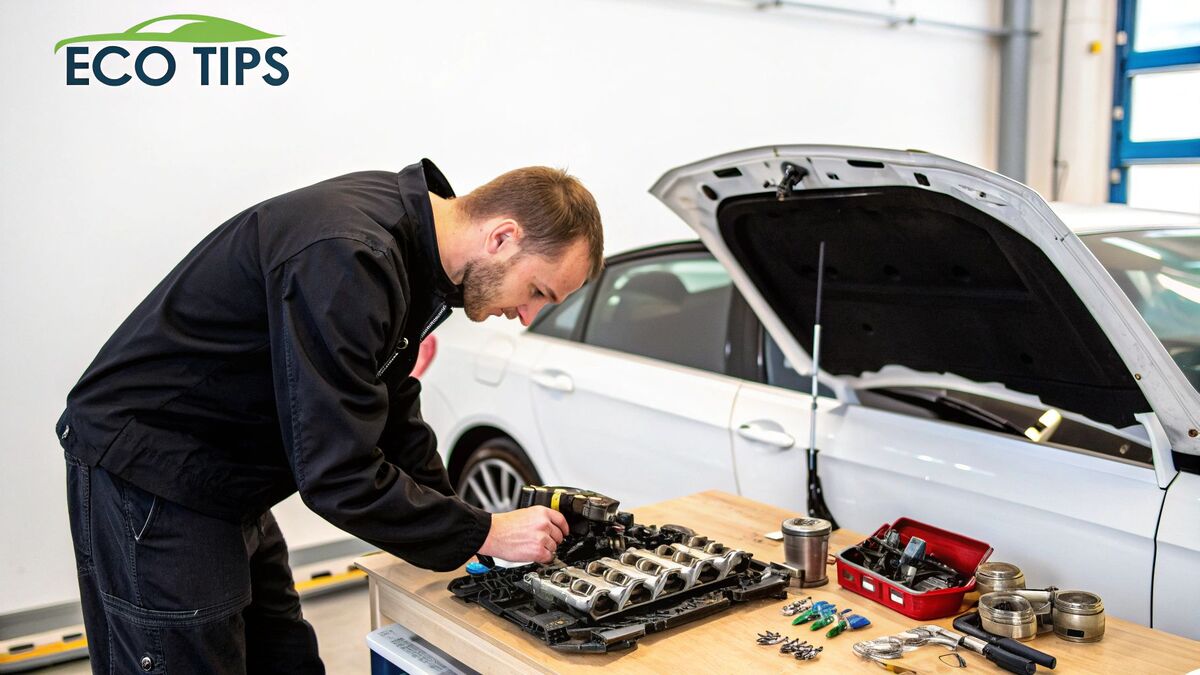
As soon as your vehicle hits the yard, specialists begin a meticulous depollution and dismantling process. First, all fluids are drained — engine oil and coolant, transmission and brake fluid, and any leftover petrol or diesel — to be recycled or disposed of under strict regulations. Then reusable parts like alternators, starter motors, and entire engine blocks are removed, tested, and resold.
Safely removing and dealing with airbags and mercury switches found in older cars is crucial, because these are hazardous materials requiring expert handling.
Finally the bare body is shredded, and magnets and sorting systems separate ferrous metals like steel from non-ferrous like aluminium, ready to be melted into raw materials for new products. Each year roughly 850,000 vehicles reach end-of-life in Australia, generating about 1.36 million tonnes of waste, of which about 70% is recovered.
Securing the Best Cash Offer
Never take the first offer — call at least three reputable services for a baseline and negotiating leverage. What buyers are really looking at:
- Vehicle weight — a heavier ute or van contains more scrap metal than a small hatchback.
- Current scrap metal prices — they change daily on global demand, so quotes may be valid only briefly.
- Make and model — popular models with in-demand parts can be worth a little more.
- Completeness — offers assume the car is whole; pulling major parts first lowers the price.
Once you have a few quotes, a polite "I have another offer for $X, are you able to match that?" can often do the trick.
Finalising Your Car Removal and Getting Paid
Before the tow truck is booked, a final confirmation call avoids surprises — confirm the pickup window, the payment method (cash on the spot is the standard), and the paperwork they'll provide (a receipt or notice of disposal).
Getting a Notice of Disposal or a similar receipt is non-negotiable — it's your official proof that you've legally handed over the vehicle.
On the day, the driver does a quick walk-around to verify the car matches your description, you sign the title or a declaration of ownership, and you receive payment before they hook the car up.
Common Questions About Automotive Recycling
What if I can't find my car's title or ownership papers?
A frequent hurdle with well-established workarounds — show your driver's licence and sign a legal declaration of ownership, which lets the recycler verify the VIN. Be upfront from the first call.
Does my car need to be running to be recycled?
Not at all — most vehicles at recycling facilities are non-runners. Value comes down to scrap metal weight and salvageable parts, and tow trucks are designed to collect non-functional vehicles for free.
How much cash can I realistically expect?
It varies with size and weight, make and model, and the current scrap price — anywhere from under $100 for a stripped shell to over $1,000 for a complete, heavy vehicle. Get a few competing quotes.
Are there hidden costs like towing fees?
With any established service, no — free towing is standard. Ask point-blank "Is your offer all-inclusive, with no hidden towing fees?" so the quote is the exact cash you'll get.
We offer competitive cash prices with on-the-spot payment and free towing anywhere in Adelaide.