
Recycling auto parts means taking cars that have reached the end of their road and giving them new purpose — systematically dismantling them, saving every component that still has life, and reclaiming raw materials like steel and aluminium to be used again. It turns automotive waste into a genuine resource, a massive win for cutting landfill and a serious financial benefit for car owners.
Unlocking the Value in End-of-Life Vehicles
Picture a retired car not as a hunk of scrap but as a treasure chest of resources. The process is highly organised — think of it less like a chaotic wrecking yard and more like an organ donation system for cars:
- Careful dismantling — functional, high-demand parts come out first: engines, transmissions, alternators, body panels.
- Thorough inspection — every salvaged component is tested to confirm it's safe and performs as it should.
- Digital cataloguing — approved parts are cleaned, catalogued, and logged so mechanics and owners can find exactly what they need.
- Material reclamation — the stripped shell is processed to recover steel, aluminium, copper, and plastics.
Each year around 850,000 vehicles are retired in Australia — roughly 1.36 million tonnes of waste — and the industry recovers much of it.
Every recycled alternator, every kilogram of reclaimed steel, and every reused side mirror is a win for resource conservation.
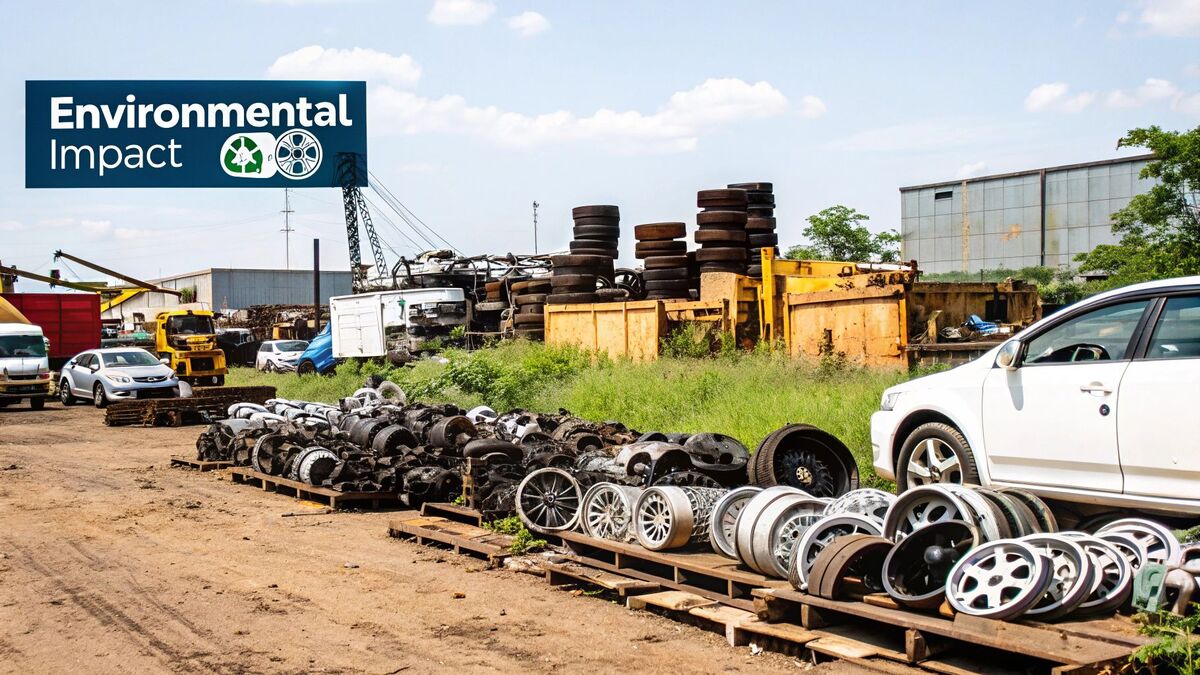
The Environmental Impact
Manufacturing a new part starts with mining ore, shipping it across continents, and energy-intensive smelting. Choosing a recycled part bypasses that entire destructive cycle. Recycling steel uses about 74% less energy than producing it from raw iron ore; for aluminium the saving climbs as high as 95%.
Proper recycling is, first and foremost, a depollution process. Before any parts are salvaged, technicians drain the dangerous fluids:
- Engine oil — highly toxic, capable of contaminating huge volumes of soil and groundwater.
- Antifreeze (coolant) — contains ethylene glycol, poisonous to animals and humans.
- Brake and transmission fluids — can contain heavy metals harmful to ecosystems.
- Battery acid — highly corrosive, leaching lead and other toxins.
By choosing a recycled component, you directly prevent the need for new mining — conserving landscapes, protecting wildlife habitats, and reducing the pollution tied to extracting virgin materials.
How Recycled Parts Create Major Savings
A recycled part sidesteps the entire supply chain of new manufacturing — raw materials, energy-hungry production, shipping, and branding — because the part already exists. The only real costs are careful removal, inspection, and cataloguing, and those savings pass straight to you. Research found the average driver could save around $2,144 over five years by choosing recycled parts, and 82% of Australian owners are open to buying them. Typical savings run from 65% to 75% on parts like gearboxes, alternators, side mirrors, and starter motors.
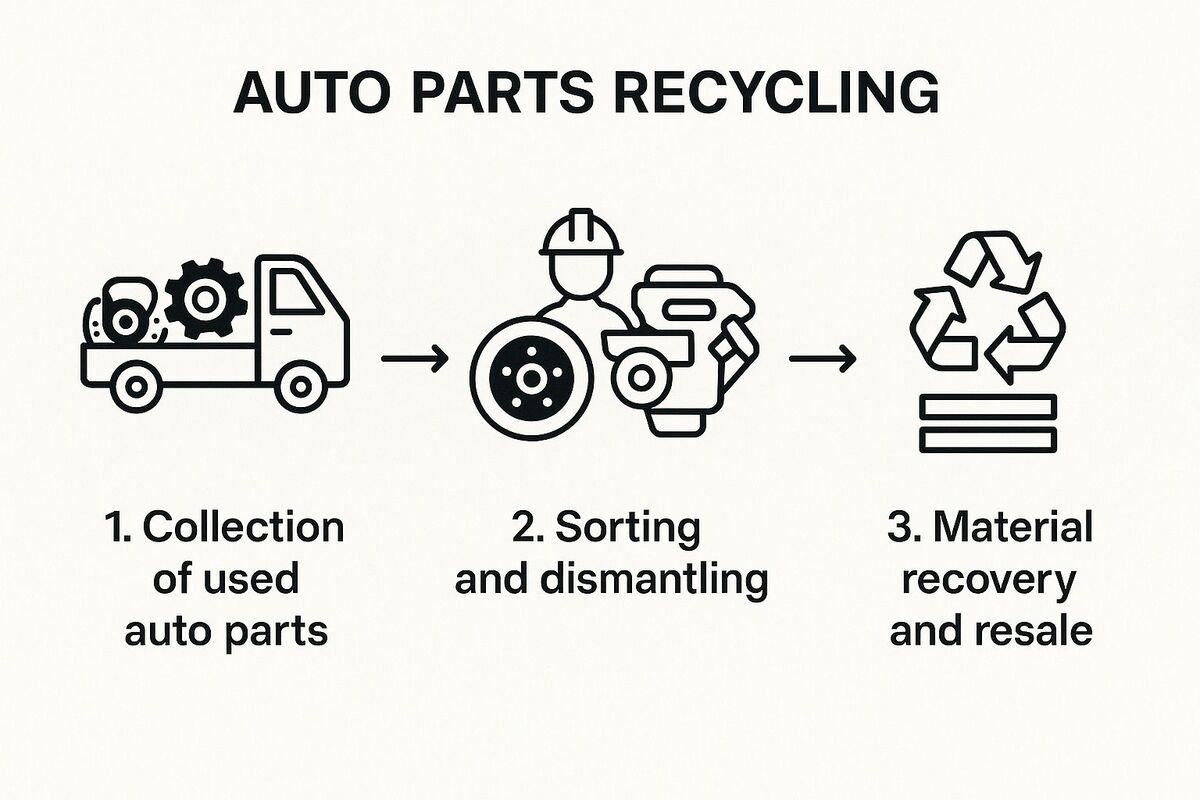
Inside the Recycling Process
Modern auto recycling is a clean, systematic operation across five key stages:
- Depollution and fluid removal — every fluid drained into its own sealed container, and the battery carefully removed.
- Strategic dismantling — skilled technicians harvest high-demand parts in a planned order, often pulling the engine and transmission as one unit.
- Quality assurance and testing — each part is inspected and bench-tested (an alternator for correct voltage, a gearbox for smooth shifting) before resale.
- Digital inventory and warehousing — tested parts are cleaned, photographed, logged against the donor car's make, model, year, and VIN, then stored.
- Material recovery and shredding — the empty shell is shredded, then magnets and sensors sort ferrous from non-ferrous metals for the smelters.
Nearly every part of a car can be repurposed — roughly 65% steel and iron, 10% aluminium, plus plastics, rubber, glass, other metals, and fluids that are re-refined into new lubricants or industrial fuel.
Finding a Reputable Recycling Service
A reputable service isn't just selling secondhand bits — they're offering confidence. Look for industry certifications like membership of the Auto Parts Recyclers Association of Australia (APRAA), a modern searchable inventory system, and clean, organised premises. Before you buy, get straight answers to four questions:
- What is your testing process for this specific part?
- What is the part's history (donor VIN and kilometres)?
- What is your warranty policy — usually 30 days to a full year, in writing?
- What is your return policy if the part is incorrect?
A trustworthy supplier will appreciate your attention to detail and happily walk you through their quality assurance process. That kind of transparency is what a confident purchase is built on.
Got Questions About Recycled Auto Parts?
Are recycled auto parts actually safe and reliable?
Yes — as long as you buy from a reputable professional. Every component goes through a rigorous inspection and is tested against OEM standards for performance and safety, which is why good suppliers back their parts with a warranty.
How can I be sure a part will fit my car?
Professional recyclers use detailed computerised inventory cataloguing each part against the donor car's make, model, year, and VIN. Give the supplier your car's details and their system pinpoints the exact part for your vehicle.
What warranty should I expect?
Any professional recycler backs their parts with a warranty — typically 30 days to a full year. Always get the details in writing before you pay.
We offer competitive cash prices with on-the-spot payment and free towing anywhere in Adelaide.